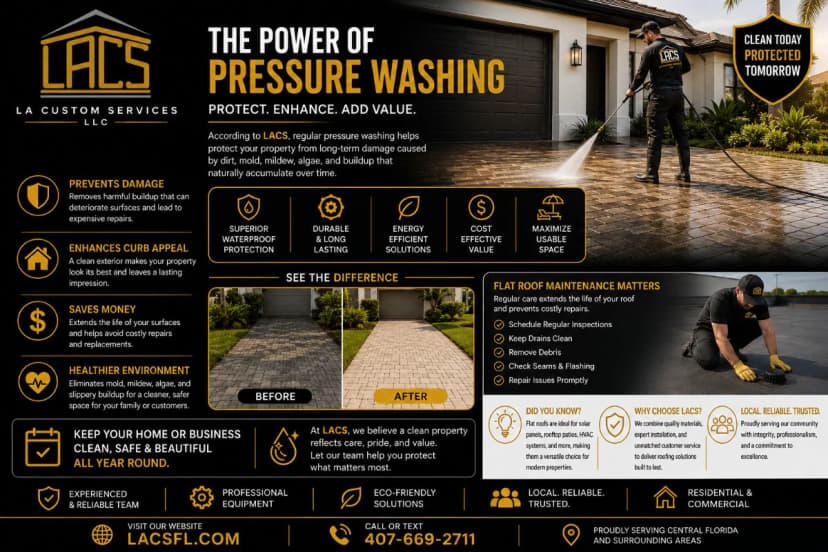
How Pressure Washing Increases Property Value Before Selling
A dirty exterior can lower perceived value. Learn how professional pressure washing and soft washing boost curb appeal and support appraisals.
Will a Dirty Exterior Actually Cost You Thousands in Home Value?
Yes. A grimy exterior can drag down perceived condition, weaken curb appeal, and trigger tougher buyer scrutiny or appraisal questions—especially when stains, algae, and mildew suggest deferred maintenance. Professional exterior cleaning is one of the fastest ways to make a home look newer, better maintained, and more “move-in ready,” which supports stronger offers and smoother appraisals.
Introduction
A common belief is that exterior cleaning is “just cosmetic,” so homeowners postpone it until right before photos or an open house. The reality is that a dirty exterior often signals neglect—even when the inside is spotless—and buyers and appraisers react to what they can see first: stains on siding, dark roof streaks, green algae on shaded walls, and dingy walkways.
Once you understand how strongly first impressions influence buyer behavior and appraisal confidence, exterior cleaning stops being optional. It becomes a practical, pre-listing upgrade that protects surfaces, reduces red flags, and helps your home compete harder in a crowded market—without the cost of major renovations.
Your siding looks tired, your roof has dark streaks, and your driveway stains are making the whole property feel neglected right now. If you wait, buyers assume bigger problems and appraisers get conservative—LACS fixes this fast with professional exterior cleaning that restores curb appeal and confidence. Talk to LACS now and lock in a cleaning date before your next showing or appraisal.

Table of Contents
- Curb Appeal Isn’t “Nice to Have”—It’s a Pricing Lever
- Appraisals Notice Condition: What Cleanliness Signals (and What Dirt Suggests)
- Pressure Washing vs Soft Washing: The Right Method Protects Your Surfaces
- High-Impact Areas Buyers Judge First (Roof, Siding, Walkways, Windows)
- Exterior Cleaning as Preventative Maintenance (Not Just a Pre-Sale Trick)
- What to Clean Before Listing: A Simple 7-Day Game Plan
- DIY vs Professional Exterior Cleaning: Where Homeowners Lose Money
- How to Document Cleaning for Buyers and Appraisers
Curb Appeal Isn’t “Nice to Have”—It’s a Pricing Lever
Curb appeal directly influences how buyers emotionally price your home before they ever step inside. A clean exterior makes the property look newer, better maintained, and easier to own—so buyers come in warmer and negotiate less aggressively. Dirty siding, stained concrete, or algae growth does the opposite: it creates doubt and discounts.
Curb appeal works like a shortcut in the buyer’s brain. When the outside looks clean and cared for, people assume the hidden systems (roofing, plumbing, HVAC) were likely maintained too—even if they haven’t verified it yet. That initial confidence affects everything that follows: how long they linger at the showing, how they interpret minor interior flaws, and whether they feel urgency to compete.
Professional exterior cleaning also improves listing photos. Cameras exaggerate contrast—meaning mildew streaks on siding or dark roof stains can look worse online than in person.
If you want a deeper breakdown of why first impressions drive buyer behavior and how washing changes perceived value quickly, To better understand how first impressions influence buyer decisions within seconds, see also the article Can Pressure Washing Increase My Home’s Value?.
Appraisals Notice Condition: What Cleanliness Signals (and What Dirt Suggests)
A clean exterior won’t “trick” an appraiser into adding value—but it absolutely reduces negative condition signals that can pull value down. Visible grime, organic growth, and staining often suggest deferred maintenance. That can lead to more cautious condition ratings or extra scrutiny that slows refinancing or complicates a sale.
Appraisers are trained to evaluate observable condition and market reaction. Even when comps set the baseline, condition influences adjustments—especially when your home competes against similar properties nearby. A well-maintained appearance supports the idea that your home belongs at the top of its comp range rather than the bottom.
Here’s what dirt can imply (fairly or not):
- Algae on roof shingles → possible roof age issues or moisture problems
- Green buildup on siding → poor drainage or chronic shade moisture
- Black streaks on gutters → overflow history or neglected maintenance
- Oil/rust stains on driveway → long-term neglect
If you’re preparing for an appraisal or refinance and want specifics on how exterior condition is interpreted during valuation, To better understand how exterior cleaning affects appraisal outcomes and perceived condition, see also the article Property Value Boost: How Exterior Cleaning Affects Home Appraisal.
Pressure Washing vs Soft Washing: The Right Method Protects Your Surfaces
Professional results aren’t just about blasting everything with high pressure. The method matters because the wrong approach can damage siding, strip paint, etch concrete, loosen window seals, or shorten roof life. Pros choose between pressure washing and soft washing based on material type and contamination level.
Pressure washing uses higher PSI to lift dirt from durable surfaces like certain concrete areas. Soft washing uses lower pressure plus appropriate cleaners to break down algae, mildew, and organic stains—making it safer for roofs and many siding types.
A practical rule of thumb:
- Use soft washing for roofs, painted surfaces, vinyl siding prone to oxidation, and algae-heavy areas.
- Use controlled pressure washing for tougher flatwork like driveways/walkways (with correct tips and distance).
The real value here is risk reduction. One DIY mistake—like forcing water behind siding—can create moisture intrusion that costs far more than professional service.
If you want a clearer picture of why hiring trained exterior cleaners prevents surface damage while delivering better results, To better understand the safety and quality differences between DIY washing and expert methods, see also the article Why You Should Choose Professional Exterior Cleaners.
High-Impact Areas Buyers Judge First (Roof, Siding, Walkways, Windows)
If you want maximum value impact from exterior cleaning, focus on what buyers see first—and what they interpret as expensive to fix. Roof stains, dirty siding, dingy walkways, and cloudy windows can make a home look older than it is. Cleaning these areas creates an immediate “well cared for” impression.
Start with these priority zones:
- Roof: Dark streaks often come from algae; they read as “roof nearing end of life” even when it isn’t.
- Siding: Green algae in shaded areas makes the whole home look damp or neglected.
- Driveway + walkways: These frame the approach; stains here lower curb appeal fast.
- Entry area + porch/patio: This is where buyers pause; dirt here feels personal.
- Windows: Bright glass increases perceived light inside and improves photos.
The best strategy is coordinated cleaning so everything matches—spot-cleaning only one surface can make adjacent areas look worse by comparison.
For more detail on which surfaces deliver the biggest visual transformation when cleaned professionally, To better understand how a pressure washing company restores roofs, patios, and exterior surfaces for curb appeal, see also the article Boosting Curb Appeal: How a Pressure Washing Company Restores Your Home’s Exterior.
Exterior Cleaning as Preventative Maintenance (Not Just a Pre-Sale Trick)
Exterior cleaning isn’t only about making things look clean—it helps slow deterioration caused by organic growth and embedded grime. Algae and mildew hold moisture against surfaces; over time that can accelerate wear on roofing materials, stain porous concrete permanently, or degrade finishes on siding and trim.
Think of professional cleaning as part of a maintenance cycle that protects value year after year—not just during listing season. A home that’s consistently maintained tends to have fewer surprise repairs during inspection because small issues are easier to spot once grime is removed (cracks in caulk lines, failing paint edges, minor wood rot).
Key preventative benefits include:
- Reduced long-term staining on concrete flatwork
- Lower biological load around shaded walls and rooflines
- Earlier detection of damaged flashing, loose gutters, or failing sealant
- Better prep if you plan to paint or re-stain later
This matters because buyers pay for certainty. A clean property looks “owned responsibly,” which supports stronger offers even when markets soften.
To better understand how routine exterior cleaning supports both curb appeal and long-term market value, see also the article Exterior home cleaning boosts curb appeal and market value.
What to Clean Before Listing: A Simple 7-Day Game Plan
You don’t need months of prep to change how your property shows—you need sequence. The goal is to remove visible stains first (the things buyers notice instantly), then tighten up details so photos look crisp and showings feel “move-in ready.”
Here’s a practical 7-day plan:
-
Day 1–2: Roof + gutters (as needed)
Remove algae streaks; clear obvious overflow staining points. -
Day 3: Siding soft wash
Focus on shaded sides where green growth returns fastest. -
Day 4: Driveway + walkway cleaning
Prioritize the approach path from street to front door. -
Day 5: Patio/deck + fence touch-ups
Clean entertainment areas; buyers imagine lifestyle here. -
Day 6: Windows + entry detailing
Bright glass + clean thresholds dramatically improve photos. -
Day 7: Final walkthrough for “contrast problems”
Anything still dirty will stand out more now—spot address it.
If you’re trying to maximize ROI right before photos go live or an open house hits the calendar, To better understand why pre-listing pressure washing often delivers one of the fastest curb appeal boosts, see also the article Power Washing Could Boost Your Home's Value.
DIY vs Professional Exterior Cleaning: Where Homeowners Lose Money
DIY exterior cleaning seems cheaper until you factor in surface risk, uneven results, time cost, and missed problem areas. Professionals don’t just bring equipment—they bring process: correct detergents for algae removal, safe pressure ranges per surface type, protection for landscaping, and consistent coverage that doesn’t leave stripes or wand marks.
Common DIY money-losing mistakes include:
- Using too much pressure on siding (forcing water behind panels)
- Etching concrete by holding a tight tip too close
- “Cleaning” roof stains with damaging methods instead of safe soft washing
- Leaving chemical residue that harms plants or discolors materials
- Creating patchy results that look worse in listing photos
Professional work also reduces liability concerns—wet walkways are slip hazards; ladders introduce fall risk; improper electrical precautions around outlets/light fixtures can create real danger.
If you’re weighing whether hiring a pro actually pays off compared with renting equipment for a weekend, To better understand the real ROI logic behind professional pressure washing before selling, see also the article Can washing the exterior of your home actually increase ....
How to Document Cleaning for Buyers and Appraisers
Documentation turns “it looks nice” into credibility—especially with cautious buyers who worry that cosmetic improvements hide defects. After professional exterior cleaning, keep simple proof that supports your maintenance story without overselling it.
What to save:
- Paid invoice/receipt showing date + scope (roof wash vs siding vs flatwork)
- Before-and-after photos from consistent angles (great for listing packets)
- Notes on any discoveries (loose gutter section repaired after cleaning)
How to use it effectively:
- Add one line in your listing notes like “Exterior professionally cleaned in [month].”
- Provide photos to your agent for marketing materials (they help online conversion).
- If an appraiser visits soon after service, mention it briefly as maintenance—not as an “upgrade.”
The point is trust: cleanliness plus proof reduces suspicion and helps buyers feel safer paying closer to asking price.
For additional guidance on how cleanliness connects directly with appraisal perception—and how to position it correctly—To better understand how exterior condition influences valuation during an appraisal, see also the article Property Value Boost: How Exterior Cleaning Affects Home Appraisal.
Is Professional Exterior Cleaning Worth It Before Selling?
In most cases, yes—because it improves perceived condition faster than almost any other pre-listing task while reducing buyer objections tied to maintenance fears. The biggest payoff comes from removing algae on roofs and siding plus restoring high-visibility concrete areas like driveways and walkways. That cleaner appearance strengthens curb appeal in photos and showings, helps your home compete against cleaner listings nearby, and can prevent lowball offers driven by “this place looks neglected” assumptions. It also supports smoother appraisals by minimizing visible condition negatives that invite conservative adjustments or extra questions. The key is doing it correctly—using safe methods per surface—so you gain visual impact without causing damage that creates new repair disclosures.
With Professional Exterior Cleaning or Without It: What’s the Difference?
With professional exterior cleaning:
- Buyers see a maintained home immediately from the curb
- Listing photos look brighter; stains don’t dominate thumbnails
- Fewer objections about roof age cues (dark streaks) or damp-looking siding
- You reduce inspection anxiety caused by visible neglect signals
Without professional exterior cleaning:
- Dirt/algae becomes a negotiation tool (“We’ll need money for this.”)
- Appraisers may lean conservative if condition appears questionable
- Your home blends into “work needed” listings even if interiors are updated
- Showings start with doubt instead of excitement
Practical conclusion: if you want top-of-range perception in your neighborhood comps, don’t let grime quietly price your home lower.
📌 Decision If you’re even thinking about selling or refinancing within the next few months, treat professional exterior cleaning like a deadline-driven value move—not a weekend chore you’ll get around to later. Every month you delay is another month stains deepen into porous surfaces, algae spreads across shaded areas, listing photos stay weaker than competitors’, and buyers build repair narratives before they ever step inside. Schedule the cleaning now so your first impression stops costing you money.
Conclusion
Professional exterior cleaning increases perceived home value by making your property look newer, cleaner, and consistently maintained—the exact signals buyers reward with stronger offers and fewer concessions. It also reduces appraisal friction by removing visible condition issues that invite conservative judgment.
If you’re prioritizing quick wins before listing day—or simply protecting long-term property appeal—start with roof staining cues, siding algae/mildew buildup, then finish with walkways and entry areas where first impressions are formed fastest.
Your roof streaks, green siding patches, and stained concrete are turning off buyers before they even reach your front door right now. If you wait another week, those visible cues keep lowering offers while LACS can restore curb appeal quickly with safe professional washing methods tailored to each surface. Talk to LACS now and schedule your exterior cleaning before photos or appraisal day.