Soft Washing vs. Pressure Washing: What’s the Difference?
Not every surface should be cleaned the same way. This guide explains the difference between pressure washing and soft washing, when each method should be used, and why choosing the wrong technique can cause expensive damage to your property.
Are You About to Ruin Your Home by Using the Wrong Wash Method?
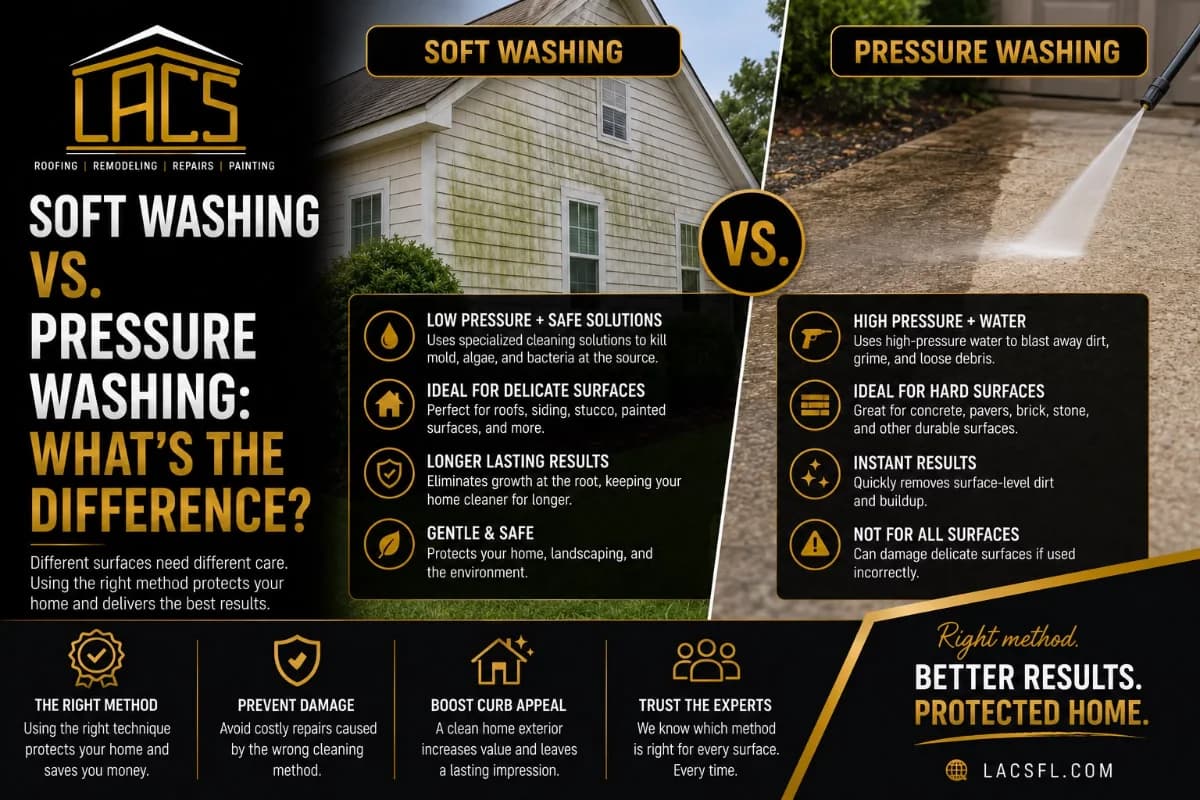
Soft Washing and Pressure Washing aren’t interchangeable—using the wrong one can permanently damage siding, strip paint, etch concrete, or force water behind walls. The real difference is simple: soft washing relies on low pressure plus cleaning solutions to kill organic growth, while pressure washing relies on high-force water to blast off grime from harder surfaces.
Introduction
A common belief is that “more pressure means a better clean,” so people crank up a machine and aim it at everything—roof shingles, vinyl siding, painted trim, even screens. The reality is that high PSI often removes the surface problem while creating a bigger one: gouges, oxidation streaks, loosened granules on shingles, and water intrusion that shows up later as swelling or mold.
Once you understand the difference between Soft Washing and Pressure Washing, your whole approach changes. You stop choosing a method based on what tool you own and start choosing based on the material, the stain type (organic vs. inorganic), and the risk of damage. That’s how you get a longer-lasting clean without paying for repairs.
Your siding is stained right now, your walkways look neglected, and every failed DIY attempt makes the buildup harder to remove safely. If you keep guessing, you risk surface damage and expensive repainting or replacement—LACS solves this by matching the correct wash method to each surface and stain type. Talk to LACS now and get the right cleaning plan before another weekend turns into another costly mistake.

Table of Contents
- Soft Washing vs Pressure Washing: what actually changes?
- When soft washing is the safer choice (and when it isn’t)
- When pressure washing is the right tool (and when it backfires)
- Surface-by-surface cheat sheet for homes
- Stain types: organic growth vs dirt vs oxidation
- DIY vs professional: what most homeowners underestimate
- How long do results last—and which method is “gentle” but effective?
- What to ask a contractor so you don’t get upsold or damaged surfaces
Soft Washing vs Pressure Washing: what actually changes?
Direct answer (40–60 words): The core difference is force versus chemistry. Soft Washing uses low pressure (closer to a garden hose) with cleaning solutions to break down grime and kill algae/mildew at the root. Pressure Washing uses high-pressure water to physically blast dirt off durable surfaces like concrete.
Soft washing is designed to be gentle on delicate materials while still being effective—because it’s not relying on brute force. That matters on roofs, painted surfaces, vinyl siding, screened enclosures, and areas where water intrusion is a real risk.
Pressure washing has its place, but it’s easy to overdo. Too much PSI can:
- Etch concrete (leaving permanent “tiger stripes”)
- Strip paint or scar wood fibers
- Force water behind siding or into soffits
- Shred window screens and loosen caulk lines
If you’re trying to understand why “soft” matters beyond marketing language—meaning not hard, not rough, agreeable, quiet—it maps perfectly onto the goal of low-impact exterior cleaning. To better understand what “soft” really implies when someone promises a gentle clean, see also the article SOFT | definition in the Cambridge English Dictionary.
When soft washing is the safer choice (and when it isn’t)
Direct answer (40–60 words): Choose Soft Washing when the surface can be damaged by high PSI or when stains are organic (algae, mildew, lichen). It’s typically safer for roofs, siding, stucco, painted trim, lanais, fences, and outdoor furniture. Avoid it only when chemistry isn’t appropriate for the material.
Soft washing isn’t “weak.” It’s targeted. The cleaning solution does the work; rinsing simply carries away dead growth and loosened grime. That’s why it often looks cleaner for longer—because you’re not just removing the top layer; you’re addressing what’s living in it.
Soft washing commonly fits:
- Roof shingles where granule loss is a concern
- Vinyl siding prone to oxidation or warping under aggressive pressure
- Stucco that can crack or absorb water
- Painted wood where peeling is already starting
Where you need caution: certain unfinished metals, specialty coatings, or sensitive landscaping may require modified mixes and careful dwell time/rinsing.
If you want clarity on how “soft” functions as an adjective—comparative forms like softer and superlatives like softest—it mirrors how contractors describe methods that reduce impact while maintaining results. To better understand the meaning of “soft” as an adjective and why “gentle” cleaning claims should be specific, see also the article SOFT Definition & Meaning.
When pressure washing is the right tool (and when it backfires)
Direct answer (40–60 words): Use Pressure Washing on hard, durable surfaces where mechanical force won’t cause damage—think concrete driveways, pavers (with correct technique), some brick, and certain commercial-grade exterior areas. It backfires on roofs, most siding, painted surfaces, and anything