The Complete Guide to Pressure Washing Your Home in Florida
Learn how to pressure wash a Florida home safely—when to soft wash, what surfaces to clean, and how humidity and salt air change the plan.
What should homeowners know about pressure washing your home in Florida?
Florida homes need a different cleaning strategy than homes in drier states. Heat, humidity, salt air, rain, pollen, and year-round organic growth make pressure washing your home in Florida less about occasional cosmetic cleanup and more about planned exterior maintenance. The right approach protects finishes, reduces slippery buildup, and helps surfaces last longer.
The short answer: Florida homes need a climate-specific cleaning plan
A beginner-friendly Florida pressure washing guide starts with one key idea: not every surface should be blasted with high pressure. In this climate, algae, mold, mildew, pollen, and grime collect faster on siding, concrete, lanais, soffits, and roofs. Coastal homes also deal with salt residue, while shaded properties often see heavier green growth and black streaking.
That means pressure washing Florida homes is really about matching the method to the material. Some areas respond well to higher-pressure rinsing, especially durable concrete. Others need soft washing vs pressure washing decisions based on paint condition, age, porosity, and water-intrusion risk. Stucco, painted siding, roof systems, screens, and older wood usually need a gentler process.
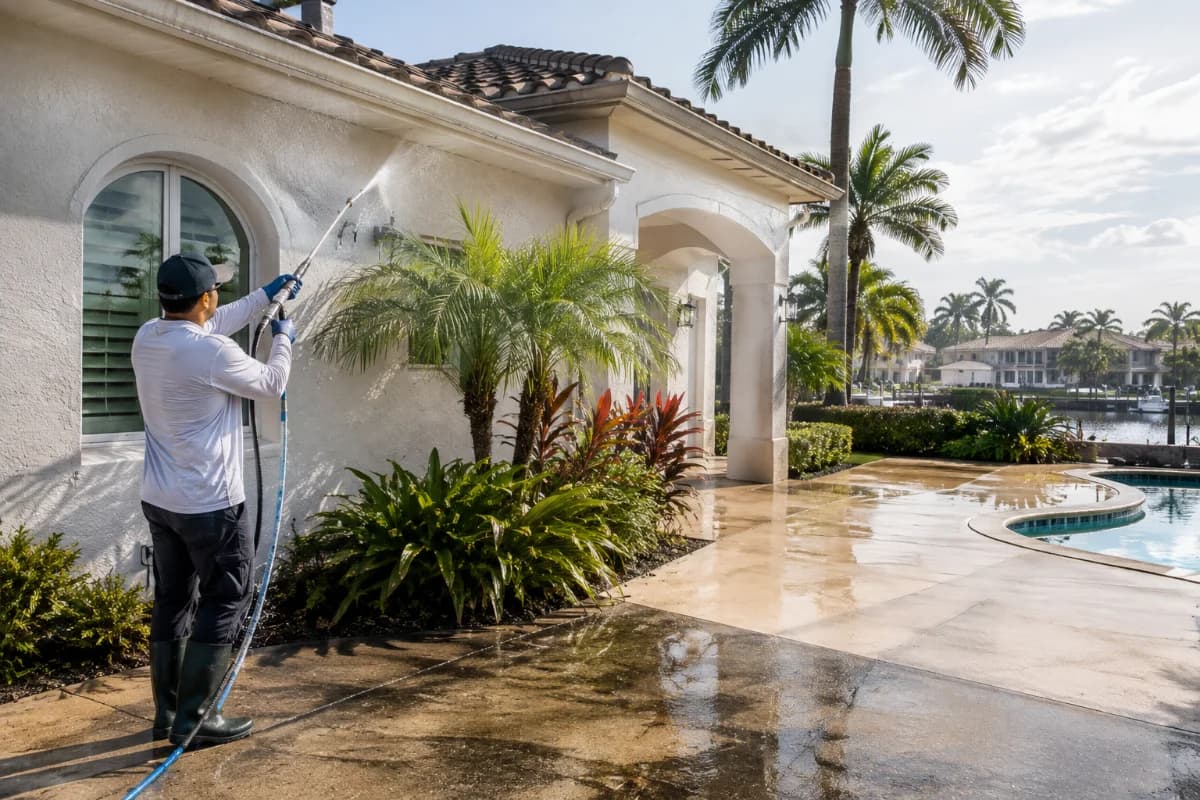
The goal is bigger than appearance. Good home exterior cleaning helps protect your home exterior, supports property maintenance Florida needs, and can improve curb appeal Florida without creating avoidable damage.
Quick summary: Florida homes get dirty faster because of humidity, rain, shade, salt exposure, and organic growth. The safest plan uses the right cleaning method for each surface, follows a realistic schedule, and focuses on protection as much as appearance.
To understand more about why correct methods matter for long-term exterior care, also see the Protect Your Investment with Professional Pressure Washing article.
What pressure washing can safely clean around a Florida home
Most homeowners think first about walls, but exterior surface cleaning can include much more than siding. Common candidates include driveway cleaning, walkways, pool decks, patios, fences, soffits, gutters, some pavers, and certain types of decking. In many cases, house washing Florida services also cover fascia boards, entry paths, garage floors, and screened enclosure frames.
Still, “safe to clean” does not always mean “safe to clean with high PSI.” Siding cleaning may require detergents and low-pressure rinsing. Patio cleaning often depends on whether the surface is sealed concrete, pavers, stone, or decorative coating. Deck cleaning changes again if the material is wood instead of composite. Roofs are especially important here: many Florida roofs should never be cleaned with aggressive pressure because of shingle damage risk.
For beginners, the safest rule is simple:
- Concrete and some masonry: often suitable for stronger washing
- Painted exteriors and stucco: usually lower pressure
- Roofs and delicate finishes: typically soft wash only
- Older or damaged surfaces: inspect before any cleaning
To understand more about safe method selection for roofs, siding, windows, and vulnerable materials, also see the Protect Your Investment with Professional Pressure Washing article.
When pressure washing helps most in Florida
The best time for residential pressure washing Florida service is usually before buildup becomes stubborn. In practice, that means seasonal cleanup after pollen season, routine maintenance before summer humidity peaks, targeted washing before repainting projects, and pressure washing after hurricane season when debris stains and organic residue have settled into exterior surfaces.
This work also matters when preparing a property for a listing. Pressure washing before selling can quickly improve first impressions by brightening walkways, reducing visible mildew staining, and making trim lines look cleaner in photos. Likewise, pressure washing before painting removes contaminants that can interfere with adhesion or leave an uneven finish if ignored.
Regular service supports broader exterior maintenance Florida goals by preventing dirt from becoming embedded and by making inspections easier. A clean wall or driveway reveals cracks, failing caulk, oxidation, or drainage issues much sooner than a neglected one.
If you want help identifying what needs soft washing, what needs standard rinsing, and what should wait for repair first, a surface assessment can save time and prevent expensive trial and error.
👉 Keep your home cleaner, safer, and protected year-round. Schedule your professional pressure washing service with LACS today.

Table of Contents
- What should homeowners know about pressure washing your home in Florida?
- Why does Florida climate change how you should wash a home?
- How often should you schedule pressure washing in Florida?
- Soft washing vs pressure washing: what is the difference for Florida homes?
- How do you pressure wash different exterior surfaces safely?
- Should you DIY or hire professional pressure washing in Florida?
- What mistakes should you avoid when cleaning a Florida home exterior?
- Conclusion
- Frequently Asked Questions
Why does Florida climate change how you should wash a home?
Florida’s climate speeds up staining and biological growth on almost every exterior material. Homes here stay exposed to moisture longer, collect more airborne debris, and often need more frequent cleaning than homes in dry regions. That changes both your method and your maintenance schedule.
How heat, humidity, and rain accelerate exterior buildup
Warm temperatures plus frequent moisture create ideal conditions for algae removal, mold removal, and mildew removal to become recurring needs instead of occasional ones. Organic growth does not just appear on neglected homes either. Even well-kept properties can develop green film on north-facing walls, black streaks under gutters, or slippery patches on shaded concrete within months.
Different materials show buildup differently. Stucco may darken in streaks or hold mildew in textured pockets. Vinyl can collect green film along lower edges. Painted trim may show spotting where irrigation overspray keeps surfaces damp. Concrete often turns darker first in shaded zones or near downspouts where runoff lingers.
A useful way to think about it is this:
Why Florida homes get dirty faster: high humidity feeds growth year-round; rain spreads dirt and spores; heat bakes residue into surfaces; shade slows drying; salt air and pollen add another layer of contamination.
Coastal air, tree cover, and storm season create different cleaning needs
Not every part of Florida creates the same maintenance pattern. Coastal properties often face salt exposure that leaves residue on windowsills, painted trim, railings, and metal fixtures. Inland homes may deal less with salt but more with oak shade, leaf tannins, heavy pollen drops, or irrigation staining from hard water.
Tree cover changes everything. A house under dense canopy dries slowly after rain and may need a shorter pressure washing frequency because mold and algae stay active longer on shaded walls and decks. By contrast, full-sun properties may show less green growth but more baked-on dust and oxidation on painted surfaces.
Storm season adds another variable. Wind-driven debris can stain siding; wet leaf matter can mark patios; fence lines may trap mud; roof edges may collect dark organic bands after repeated storms. That is why many homeowners schedule inspections or cleanup after major weather events rather than waiting for annual service alone.
Why cleaning is part of prevention, not just appearance
A cleaner exterior is easier to inspect and easier to maintain. That matters in Florida because trapped grime can hide failing paint edges, hairline stucco cracks, sealant gaps around openings, or slick concrete that becomes a slip hazard during rainy weather.
Routine exterior house cleaning also supports finish longevity. Paint adheres better when surfaces are properly cleaned before recoating. Concrete lasts better when organic growth is removed before roots or moisture retention worsen surface wear. Entryways stay safer when biofilm is treated before it becomes slick under bare feet or sandals near pools.
This is where homeowner planning matters most: choose the right timing and method before buildup turns into restoration work. The focus is not just “make it look better today,” but “keep materials manageable over time.”
How often should you schedule pressure washing in Florida?
Most Florida homes benefit from recurring exterior cleaning rather than waiting until stains become obvious from the street. The exact timing depends on shade, moisture exposure, nearby trees, coastal conditions, traffic patterns around the property, and what materials are being cleaned.
A practical pressure washing schedule for most Florida homes
For beginners building a realistic pressure washing schedule, start with broad intervals instead of trying to clean everything at once every year. Walls may need one rhythm while flatwork needs another.
Here is a practical baseline for many homes:
| Surface | Typical Interval | Clean Sooner If |
|---|---|---|
| Siding / stucco / painted exterior | Every 6–12 months | Shade, mildew streaks, heavy pollen |
| Driveways / walkways | Every 6–12 months | Slippery film or dark traffic lanes |
| Patios / pool decks | Every 6–12 months | Algae near planters or standing water |
| Decks | Every 12 months | Mold spots or splinter risk |
| Fences | Every 12–18 months | Tree cover or irrigation overspray |
| Roofs | As needed; often 1–2+ years | Black streaks or moss-like growth |
That is only a starting point. A shaded coastal property may need semiannual service on visible areas while a sunny inland home might stretch some surfaces longer between visits.
To understand more about recommended schedules that protect common residential surfaces, also see the Protect Your Investment with Professional Pressure Washing article.
Signs your home needs cleaning sooner than expected
Sometimes your calendar says “not yet,” but your house says otherwise. One of the clearest signs is visible green film on lower siding or patio edges. Another is black spotting under eaves or around gutters where moisture hangs longer after rain.
Watch for these early indicators:
- Slippery concrete near entries or pool areas
- Spider webs collecting dust along soffits
- Mildew speckling on painted trim
- Oxidized-looking chalkiness on siding
- Dark tire-lane staining on driveways
- Green buildup at fence bottoms or deck corners
Waiting too long usually increases labor because contaminants bond tighter over time. It can also turn simple rinsing into detergent-heavy treatment or repeat applications for full removal.
If you notice these symptoms repeatedly in the same places, your property probably needs an adjusted maintenance cycle rather than occasional reactive cleaning.
Best times of year for house washing in Florida
In most areas of the state, spring is useful for removing pollen film before it hardens into grime layers. Early summer can work well too if service happens before daily storms create constant rewetting conditions. Many homeowners also prioritize pressure washing after hurricane season to clear storm residue once weather stabilizes.
Drying conditions matter more than people expect. Detergents need enough dwell time to break down algae and mildew without drying too fast in direct sun. At the same time, heavy rain immediately after treatment can reduce effectiveness on some surfaces or delay complete cleanup around landscaping-sensitive areas.
A practical strategy looks like this:
- Spring: remove pollen and winter grime
- Summer: monitor shaded growth closely
- Fall: ideal for post-storm cleanup
- Year-round: spot clean slippery areas as needed
If your walls are already showing green film or your driveway gets slick after every rainstorm, scheduling seasonal service now is usually easier than waiting for peak buildup to return again.
👉 Don't wait for algae, mold, and grime to cause costly damage. Get a customized exterior cleaning plan from the LACS team.
To understand more about timing cleanings so buildup does not turn into avoidable surface wear, also see the Protect Your Investment with Professional Pressure Washing article.
Soft washing vs pressure washing: what is the difference for Florida homes?
The difference comes down to force versus chemistry. Soft washing uses low pressure plus appropriate cleaning solutions to treat delicate surfaces safely. Standard pressure washing relies more on water force for durable materials like concrete where higher impact is less likely to cause damage.
What soft washing is and when it is the better option
For beginners wondering about soft washing vs pressure washing, soft washing is usually the safer choice when a surface can be damaged by strong spray but still needs deep biological treatment. The system uses low-pressure application of cleaners that loosen algae, mold, mildew, dirt films, and other contamination before a controlled rinse removes them.
This matters across Florida because many residential materials are vulnerable even when they look sturdy from ground level. Roof shingles can lose granules under aggressive spray. Painted siding can peel at weak edges. Stucco can trap water if hit incorrectly at close range. Screens bend easily; older wood fibers lift fast.
Soft washing is commonly preferred for:
- Roof cleaning
- Painted siding
- Stucco exteriors
- Soffits and fascia
- Screen enclosures
- Older decks or fences
What pressure washing is and where higher pressure works best
Traditional pressure washing uses concentrated water force to dislodge dirt from tougher surfaces. In residential settings that usually means flatwork such as sidewalks, driveways, garage floors, retaining walls, some pavers depending on condition and joint stability, and other hardscape areas that tolerate stronger mechanical action.
You will also hear the term power washing used loosely. In everyday conversation people often mean the same thing by power washing and pressure washing. Technically there can be differences involving heated water equipment in some contexts, but most homeowners simply need to know whether their surface requires stronger spray or low-pressure treatment.
Here is a simple comparison:
| Surface | Recommended Method | Risk Level if Wrong Method Is Used | Typical Result |
|---|---|---|---|
| Asphalt shingle roof | Soft wash | High | Stain treatment without granule loss |
| Stucco wall | Soft wash / low pressure | Medium to high | Cleaner finish with less intrusion risk |
| Painted wood siding | Soft wash | High | Removes mildew while protecting paint |
| Concrete driveway | Pressure wash | Low to medium | Brightens traffic lanes and removes film |
| Paver patio | Case by case | Medium | Good results if joints are stable |
| Composite deck | Low to moderate pressure | Medium | Removes grime without furrowing |
How the wrong method can damage a Florida home
Using too much force is one of the fastest ways to turn routine maintenance into repairs. Water can be driven upward behind siding laps; paint can lift at old edges; window seals can weaken; screens tear; soft wood splinters; decorative coatings etch; shingles lose protective granules that cannot be put back.
Before choosing a method, use this quick checklist:
- Is the surface painted or already weathered?
- Does it have seams where water could be forced behind it?
- Is there visible cracking or loose material?
- Is biological growth present that needs chemical treatment first?
- Is the area elevated or difficult to inspect closely from ground level?
If several answers raise concern, lower pressure or professional evaluation is usually smarter than experimenting with a rental unit.
To understand more about DIY risks that affect roofs, siding integrity, windows, and finish life, also see the Protect Your Investment with Professional Pressure Washing article.
How do you pressure wash different exterior surfaces safely?
Safe cleaning starts by treating each material differently. There is no single nozzle setting or spray distance that works everywhere around a Florida house. Surface age, finish type, moisture exposure history, and repairs already made to the area all influence technique.
House washing: siding, stucco, soffits, and painted exteriors
House walls often look similar from afar but behave very differently during cleaning. Vinyl siding generally tolerates careful low-to-moderate rinsing if you avoid spraying upward under laps. Fiber cement holds up well when cleaned correctly but still benefits from controlled technique around joints and caulked areas. Stucco usually needs softer treatment because texture traps growth while cracks create intrusion risk if sprayed aggressively at close range.
Painted wood deserves extra caution because failing edges lift easily once pressurized water gets underneath them. Brick itself may seem durable enough for heavy spray, but mortar joints can deteriorate if they are old or already weakened.
Detergent choice matters too when treating visible organic staining during mold removal or mildew removal work. The goal should be to kill growth at the root level rather than only strip off what you can see from the top layer.
Hard surfaces: driveways, walkways, patios, and concrete
Flatwork usually gives homeowners their most dramatic visual improvement because darkened traffic lanes brighten quickly once grime lifts away properly. Even so, good results depend on pretreatment, nozzle control, spray angle, and distance from the slab rather than raw force alone.
For effective concrete cleaning, pretreating algae-heavy zones helps loosen organic matter so you do not have to overwork one area repeatedly. Nozzle choice affects striping risk, especially on decorative finishes or older slabs with uneven wear patterns. Pavers introduce another concern: too much force can disturb joint sand or expose weak edges if they have shifted over time.
Keep expectations realistic around rust stains, battery acid marks, and deep oil penetration since those may not fully disappear through standard surface rinsing alone.
Common priorities include:
- Reduce slip hazards near entries
- Remove green film from shaded sections
- Brighten driveways before guests arrive or photos are taken
- Clean patios without gouging decorative coatings
To understand more about safe hardscape cleaning that avoids unnecessary wear, also see the Protect Your Investment with Professional Pressure Washing article.
Roofs, decks, and other surfaces that need extra caution
Roofs deserve special attention because many homeowners assume they are simply another dirty surface that needs stronger blasting. In reality, most roof systems should be treated as soft wash projects. High pressure can shorten shingle life, dislodge granules, and push water where it does not belong.
Deck cleaning changes by material. Wood boards can furrow if sprayed too closely, leaving permanent lines that become obvious after drying. Composite decking handles moisture differently but still should not be overworked. Pool decks, lanais, fences, and outdoor furniture each bring their own limits depending on coatings, fasteners, and age.
Use extra caution around:
- Screen enclosures
- Painted railings
- Weathered fences
- Outdoor cushions nearby
- Electrical fixtures under eaves
When elevated access, delicate finishes, or roof staining are involved, professional handling is often safer than trial-and-error DIY work.
Should you DIY or hire professional pressure washing in Florida?
DIY works best for limited ground-level tasks on durable surfaces in good condition. Once height, delicate finishes, severe biological growth, or uncertain material compatibility enter the picture, professional service usually offers better safety, better consistency, and less chance of accidental damage.
What DIY pressure washing can realistically handle
Homeowners can often manage small-scale jobs such as lightly soiled walkways, patio furniture areas, or modest driveway touch-ups if they use appropriate equipment carefully. Ground-level rinsing around durable concrete tends to be far safer than experimenting on roofs, upper-story walls, or painted trim.
Preparation matters as much as spraying. Move furniture out of splash zones. Protect plants where cleaners may run off. Check outlets if using electric washers. Test one small section first so you do not discover too late that paint lifts easily or decorative coating stripes under concentrated spray.
Reasonable DIY jobs usually involve:
- Small concrete pads
- Short walkways
- Basic rinse-downs of sturdy masonry features
- Spot treatment between scheduled full cleanings
What rental machines cannot replace is judgment about chemistry, dwell time, surface vulnerability, and hidden failure points.
When professional pressure washing is the smarter choice
Professional help makes sense when your project includes multi-story access, roof staining, fragile materials, severe algae growth, pre-listing presentation needs, or uncertainty about whether soft wash treatment is required. Experience matters most when different materials meet at one elevation line — like stucco beside painted trim under windows near screens.
A qualified crew should know how to select detergents appropriately, control runoff responsibly, protect surrounding landscaping better, and adjust technique based on real-world wear instead of assumptions. That becomes especially valuable during larger-scale projects such as full-property refreshes before guests arrive, repainting begins, or listing photos are scheduled.
Cost, value, and results: what homeowners should compare
Price alone rarely tells you which option costs less overall. A DIY weekend includes machine rental or purchase, hoses, nozzles, detergents, setup time, cleanup time, and risk if something goes wrong. A professional job costs more upfront but may deliver cleaner results faster while reducing liability around ladders, overspray, and damaged finishes.
When comparing options, ask practical questions:
- Which method will be used on each surface?
- Are delicate areas soft washed?
- How will plants, screens, and nearby fixtures be protected?
- What runoff considerations apply?
- What result should I realistically expect?
The best value comes from matching method to material rather than chasing maximum PSI or minimum price.
To understand more about evaluating service quality beyond basic cost comparisons, also see the Protect Your Investment with Professional Pressure Washing article.
What mistakes should you avoid when cleaning a Florida home exterior?
Most homeowner mistakes come from using too much force at the wrong angle or treating all stains as if they were ordinary dirt. In Florida, moisture-driven growth often requires pretreatment, patience, and lower-impact methods rather than harder blasting.
The most common pressure washing mistakes homeowners make
One frequent mistake is assuming stronger equals cleaner. Excessive PSI can scar wood, etch softer masonry, stripe decorative coatings, and force water behind cladding. Another problem is spraying upward under siding laps or soffit vents, which increases intrusion risk instead of simply rinsing away grime.
Skipping pretreatment causes trouble too. Algae, mold, and mildew often cling tightly unless chemistry has time to break them down first. Without that step, people linger too long in one spot trying to compensate with force alone. Cleaning during harsh midday heat creates another issue because detergents may dry too quickly before doing their job properly.
Bleach-only approaches are also risky when used carelessly. They may produce uneven results, miss underlying contamination patterns, or stress nearby plants if runoff control is poor.
Mistakes that affect painting, selling, and long-term maintenance
Timing errors matter almost as much as technique. With pressure washing before painting, rushing into primer before full drying can trap moisture issues beneath new coatings. Failing to remove chalky residue properly may hurt adhesion even if walls look visually cleaner from ten feet away.
With pressure washing before selling, last-minute cleanup sometimes backfires when streaks remain visible, landscaping gets stressed, or neglected areas stand out next to freshly brightened ones. A better approach gives enough lead time for touch-ups, drying, inspection, and any minor repairs revealed once grime comes off.
Long-term upkeep suffers when owners wait until staining becomes severe every few years instead of following manageable intervals. Consistent care supports stronger curb appeal without turning each visit into restoration work.
📌 Decision
Decide based on risk first
- DIY now if you are cleaning small ground-level concrete areas in good condition using cautious technique.
- Schedule professional cleaning soon if your home has roof stains, multi-story walls, painted exteriors, screens, severe algae growth, or slippery flatwork.
- Postpone and monitor only if buildup is light, the surface is stable, and weather conditions are not ideal right now.
If you are unsure whether a surface needs soft washing or standard pressure treatment, the safest next step is an expert opinion before damage occurs.
A short conversation now can prevent lifted paint, etched concrete patterns, or roof damage later. If your property has mixed materials or visible biological staining, getting guidance before starting usually saves money compared with correcting avoidable mistakes afterward.
To understand more about choosing safe next steps based on surface condition rather than guesswork, also see the Protect Your Investment with Professional Pressure Washing article.
Conclusion
Florida homes stay cleaner longer when owners focus on method, timing, and consistency instead of maximum spray power. The right mix of soft washing, targeted pressure work, and realistic scheduling helps preserve appearance while reducing unnecessary wear across roofing, siding, and flatwork.
The right cleaning method protects appearance and surface life
The biggest takeaway from this guide is simple: successful home maintenance Florida plans depend on matching technique to material. Concrete may benefit from stronger mechanical cleaning while painted exteriors, stucco, screens, and roofs usually call for gentler treatment. That balance improves visual results while helping extend finish life across exposed surfaces.
Routine care also makes future maintenance easier. When grime, mold, and algae are removed before they become deeply embedded, inspections become clearer, painting prep becomes smoother, and slippery outdoor areas become easier to manage safely.
To understand more about how proper method selection supports long-term residential care, also see the Protect Your Investment with Professional Pressure Washing article.
Build a simple Florida exterior cleaning plan
A practical yearly plan might include spring pollen cleanup, summer monitoring for shaded algae zones, post-storm inspection in fall, and spot treatment whenever walkways become slick. Once you know which parts of your property collect buildup fastest, your schedule becomes easier to manage without overcleaning vulnerable materials.
👉 Protect your investment with the right cleaning method for every surface. Contact LACS today and keep your Florida home looking its best.