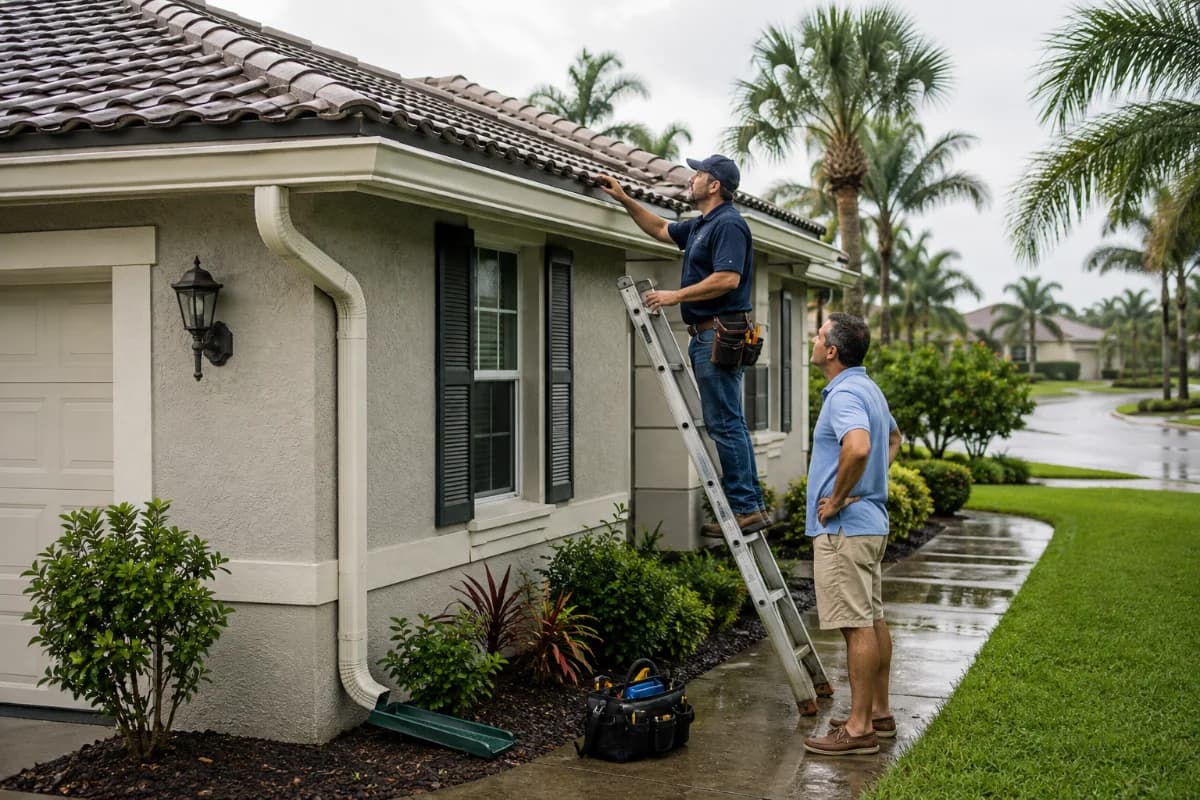
Florida Home Improvement & Preventive Maintenance Guide
Florida home improvement priorities: protect roof, drainage, moisture control, and HVAC first—then windows, doors, and cosmetic upgrades.
What should Florida homeowners prioritize in home improvement and preventive maintenance?
Florida homeowners should prioritize anything that keeps water, heat, humidity, and wind from damaging the house. In practical terms, that means protecting the structure first, then improving system performance, and only after that moving on to cosmetic upgrades. A smart Florida home improvement plan starts with risk reduction, not finishes.
The short answer: protect structure first, then improve efficiency and comfort
For most homes, the right priority order is:
- Roof and flashing
- Drainage and grading
- Moisture control and ventilation
- HVAC performance
- Exterior surfaces and sealants
- Windows and doors
- Interior upgrades and appearance changes
That order matters because home improvement in Florida is shaped by a harsher environment than many other states. Heat, year-round humidity, wind-driven rain, intense UV exposure, salt air in coastal areas, and storm events all put pressure on the building envelope. If the roof leaks, drainage fails, or humid air enters where it should not, even a beautifully remodeled interior can be damaged quickly.
Preventive home maintenance is different from elective renovation work. Preventive maintenance protects systems you already have so they last longer and fail less often. Home renovation Florida projects usually change layout, finishes, features, or function. One preserves value; the other may improve comfort or resale appeal.
A realistic planning framework for beginners
A beginner-friendly way to approach a home maintenance guide is to sort every task into four buckets:
- Urgent repairs: active leaks, electrical hazards, failing HVAC, drainage problems
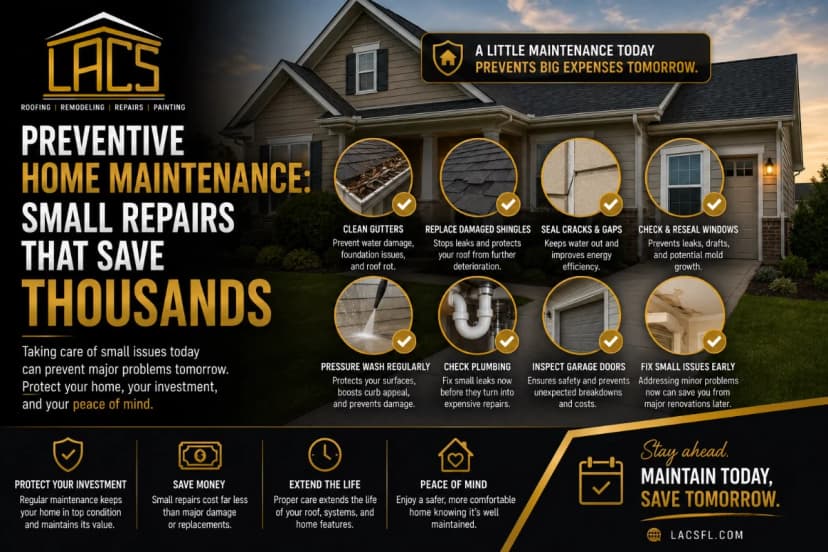
- Preventive tasks: filter changes, sealant renewal, gutter cleaning, inspections
- Value-adding upgrades: impact-resistant doors, better insulation, improved ventilation
- Cosmetic remodeling: flooring, paint colors, cabinet fronts, decorative finishes
This keeps home improvement planning grounded in reality. A 25-year-old inland house with deferred maintenance needs a different strategy than a newer coastal property with corrosion exposure. Location matters. Age matters. Past care matters. Even two homes in the same neighborhood can have very different lifecycle costs depending on roof age, attic ventilation quality, tree coverage, drainage design, and prior repair history.
What this guide helps you decide
This Florida homeowners guide is designed to help you decide what to do first, what can wait, what likely needs a licensed professional, and where your money will have the biggest protective effect. It also helps set expectations for timing, disruption, hidden conditions, and the difference between routine upkeep and major project scope.
If you are new to ownership or trying to get organized after years of reactive repairs, this article gives you a framework for long-term home maintenance without overcomplicating it. You will learn how to think about building protection before aesthetics, how to create a workable home improvement checklist, and how to reduce expensive surprises over time.
👉 Protect your Florida home with a smarter maintenance plan. Contact LACS today and stay ahead of costly repairs.

Table of Contents
- How do Florida climate and property conditions shape maintenance priorities?
- What belongs in a Florida home maintenance checklist by season?
- How should homeowners plan home improvement projects in Florida?
- Preventive maintenance vs remodeling in Florida: what is the difference?
- What mistakes cause expensive home damage in Florida?
- Conclusion
- Frequently Asked Questions
How do Florida climate and property conditions shape maintenance priorities?
Florida climate changes the order of operations for residential property maintenance. Moisture exposure, storm pressure, solar heat gain, and site drainage all raise the cost of neglect. That is why Florida home maintenance should be built around weather resilience first and appearance second.
Why Florida homes fail differently than homes in milder climates
In many parts of the country, wear happens slowly enough that small issues can sit for a while before becoming serious. In Florida, that is often not true. Moisture intrusion can spread behind finishes quickly. UV exposure breaks down caulks, coatings, plastics, and sealants faster. Storm stress tests roofing edges, soffits, flashing transitions, and drainage paths repeatedly through the year.
Humidity load also changes indoor risk. When warm, moist air enters through gaps or when cooling systems are not managing latent moisture well, mold growth becomes more likely. Condensation around ducts, vents, windows, or poorly insulated surfaces can create hidden deterioration long before obvious staining appears inside.
That is why any preventive maintenance guide for this state has to be climate-specific. Generic advice like “check things once in a while” is not enough when wind-driven rain and prolonged humidity can turn minor defects into structural damage.
The systems that need the most attention
Some components consistently deserve top billing in a Florida homeowners guide:
- Roof coverings and flashing details
- Gutters, downspouts, splash control, and grading
- HVAC equipment and condensate management
- Attic ventilation and insulation balance
- Sealants around penetrations
- Exterior coatings and waterproofing layers
These systems interact with each other. For example, poor grading may increase moisture around walls; failed sealant may let water enter; weak attic ventilation may intensify heat buildup; HVAC strain may rise because of infiltration or solar load; interior comfort drops while operating costs climb.
Older homes often need closer review of aging materials and prior patchwork repairs. Newer homes may perform better overall but still need monitoring at transitions where water intrusion begins: roof-to-wall joints, window perimeters, plumbing penetrations, door thresholds, soffits, and mechanical connections.
How location changes your maintenance schedule
Not every part of Florida creates the same stress profile. Coastal homes deal with salt air corrosion that affects fasteners, metal connectors, outdoor equipment housings, railings, hardware finishes, and even some roofing components faster than inland properties. Flood-prone lots need stricter attention to grading patterns and drainage exits. Tree-heavy neighborhoods increase debris accumulation on roofs and in gutters while raising branch impact risk during storms.
Meanwhile, homes with strong western sun exposure often experience faster breakdown of exterior paint films and higher cooling loads on specific walls or window banks. That means your seasonal home maintenance schedule should reflect site conditions rather than follow a generic list blindly.
At a high level, location can also affect permitting requirements for certain improvements as well as insurance documentation expectations after storms or during policy reviews. Knowing that early helps with realistic planning.
What belongs in a Florida home maintenance checklist by season?
A strong seasonal checklist should rotate inspections around storm exposure, cooling demand, moisture risk, and post-weather recovery. The goal is not constant busywork. It is scheduled observation so small defects are found early enough to stay manageable and affordable.
Spring and pre-summer storm preparation
Spring is one of the most important times for preventive home maintenance because it sits right before peak rain and cooling demand. Start outside with roof coverings: look for missing shingles or tiles out of place, damaged flashing edges, loose fasteners where visible from safe ground views, worn pipe boots, soffit openings, fascia damage, or debris holding moisture against surfaces.
Next, review water movement around the house. Check gutters if present; confirm downspouts discharge properly; look for erosion near corners; inspect swales or drains; make sure mulch beds are not trapping water against walls; verify hardscape slopes away from thresholds where possible.
This is also the right time to service HVAC equipment before heavy summer use begins. Replace filters as needed; clear vegetation around outdoor units; inspect condensate lines; note unusual cycling or weak airflow; schedule professional service if cooling performance has changed.
Doors and windows deserve attention too. Look for failing caulk lines, torn screens, sticking operation from swelling or settlement shifts, and signs of past leakage at sills or trim joints.
Summer and hurricane season priorities
During summer and hurricane season, the focus shifts toward water management, fastening integrity, vegetation control, and indoor humidity awareness. This is when neglected weak points are most likely to show themselves under real stress. Watch for overflowing gutters during heavy rain, ponding near entries, drips around windows, musty odors, ceiling stains, or condensation forming where it did not appear before.
Tree trimming matters here not just for appearance but for roof protection, gutter performance, and safer clearance around structures. Backup power readiness may also matter depending on your household needs, especially if medical devices, refrigeration concerns, or sump-related equipment are part of your situation. Even without a generator, you can still prepare by checking surge protection strategies, battery supplies, flashlights, and safe shutdown procedures for key equipment.
Inside the house, pay attention to relative humidity symptoms: clammy rooms, persistent mildew smell, sweating vents, or uneven cooling. Those often point to airflow imbalance, oversized equipment behavior, duct leakage, or moisture intrusion rather than “just summer weather.”
Fall and winter maintenance for Florida homes
Fall and winter are ideal for reassessment after storm season. Use this period to inspect roof condition again, clean drainage systems thoroughly, review stucco or siding for cracks or movement, test smoke alarms and other safety devices, and correct small defects before they become expensive moisture pathways. Florida winters are mild compared with northern climates, but they offer useful breathing room for repair scheduling.
This is also when many owners should document current condition with photos. Capture roof edges visible from ground level, wall cracks, caulk joints, window trim conditions, equipment labels, and any repaired areas. A simple photo log supports warranty tracking and makes it easier to compare year-over-year changes rather than guessing whether something worsened recently or has looked that way for years.
Minor repairs belong here too: touch-up sealant replacement, small exterior paint failures, screen repair, drainage cleanup, attic review after storms if safely accessible, and checking garage door weather seals. Small interventions during this season often prevent larger spring discoveries.
Turn your checklist into a monthly recurring schedule with dated notes and photos so you can spot patterns early instead of relying on memory after damage appears.
👉 Don't wait for small issues to become major expenses. Schedule a professional home assessment with LACS and protect your investment.
How should homeowners plan home improvement projects in Florida?
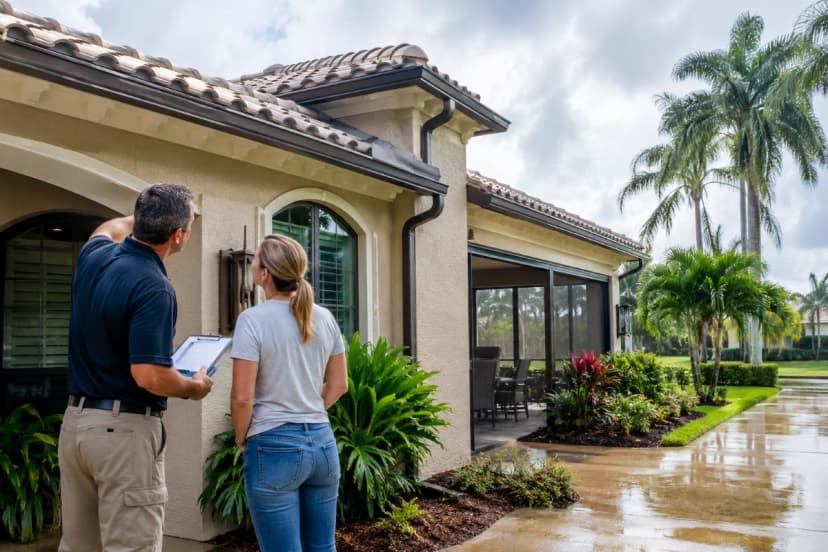
The best way to plan projects in Florida is to start with verified conditions instead of ideas pulled from photos alone. Inspection findings define priority. Inspiration defines style later. That sequence helps avoid spending money on visible upgrades while hidden envelope problems continue getting worse behind them.
Start with inspection findings, not inspiration photos
A useful project plan begins with three inputs:
- A current condition review
- A basic maintenance history
- A realistic budget range
That means walking through your house with a home inspection checklist mindset before discussing finishes or layouts. List active leaks, HVAC concerns, exterior cracks, soft trim areas, staining patterns, door or window issues, drainage trouble spots, and any recurring comfort complaints. Then separate those findings into “must-do now” versus “want later.”
This step protects you from one of the most common planning mistakes: starting cosmetic work before solving building envelope issues. New cabinets do not fix moisture intrusion. Fresh paint does not solve failed sealants. A patio redesign does not replace proper grading correction if water still moves toward the structure.
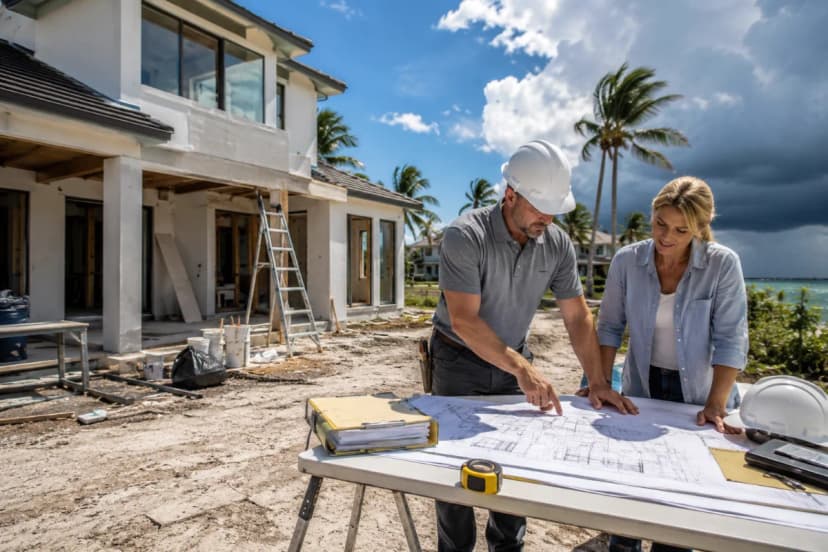
Once core risks are identified, you can evaluate optional home upgrades Florida owners often consider later: better windows, improved insulation strategies, updated flooring materials suited to humidity, kitchen refreshes, bathroom remodeling, or outdoor living improvements designed for local weather exposure.
Build a phased budget for repairs, upgrades, and renovations
Most owners do better with phased budgeting than with one giant wish list. A simple model looks like this:
| Time frame | Typical focus |
|---|---|
| Immediate | Active leaks, safety issues, failing HVAC components, urgent drainage corrections |
| Next 12 months | Preventive service items, sealants, coating touch-ups, minor exterior repairs |
| 3-year bucket | Window/door upgrades, larger HVAC decisions, attic improvements |
| 5-year bucket | Major renovation phases such as kitchen remodels or broader exterior replacement work |
This approach supports capital planning without pretending every issue must be solved at once. It also leaves room for hidden damage once walls are opened or once contractors uncover code-related updates required during permitted work. That reserve matters in Florida where storm wear and concealed moisture problems can alter project cost quickly.
Try keeping separate budget categories: one for routine preventive care, one for known repairs, one for desired improvements, and one contingency fund. That structure makes decision-making clearer when unexpected work appears mid-project.
When to DIY and when to call a pro
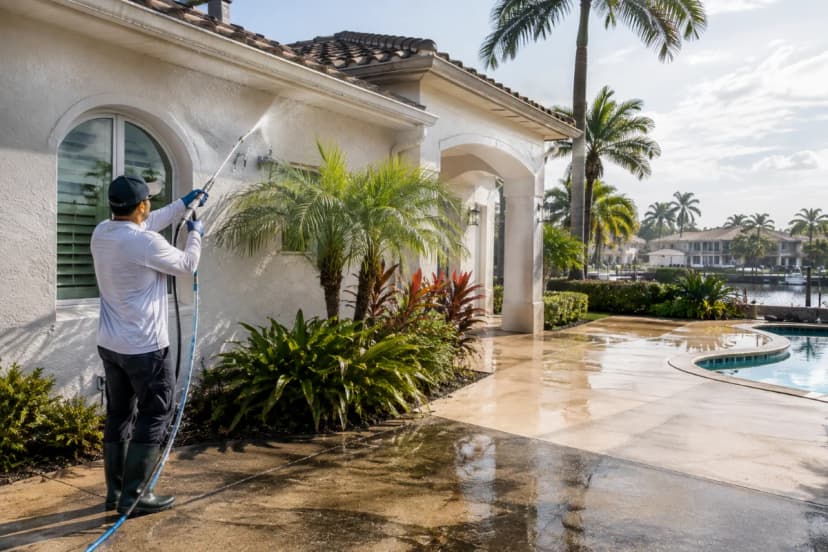
Many beginner-level tasks are reasonable do-it-yourself jobs if done safely: changing filters, cleaning visible drains at grade level, washing mildew from appropriate surfaces using correct methods, replacing weatherstripping, documenting conditions with photos, checking screens, or monitoring caulk deterioration. Basic observation is one of the most valuable homeowner skills you can build.
Higher-risk categories usually deserve licensed help or specialized evaluation:
- Roofing repairs beyond very minor visible cleanup
- Electrical work
- HVAC diagnostics or refrigerant-related service
- Structural modifications
- Persistent moisture intrusion investigation
- Window or door replacement requiring flashing integration
- Major exterior envelope repairs
The reason is not just technical complexity. It is compounding risk. A bad patch on flashing or an incorrectly installed replacement component can trap water where you cannot see it until damage spreads inside framing or finishes. The cheapest attempt upfront can become the most expensive result later.
Preventive maintenance vs remodeling in Florida: what is the difference?
Preventive maintenance preserves performance; remodeling changes function or appearance. In real life they overlap sometimes, but they are not interchangeable. Knowing which category a project belongs to helps you set urgency correctly and avoid overspending on upgrades while essential protective work remains unfinished.
Preventive maintenance protects value; remodeling changes function or appearance
In plain language:
- Preventive home maintenance = routine actions that reduce wear and delay failure
- Home repair Florida work = fixing something damaged or malfunctioning
- Renovation/remodeling = changing layout, materials, features, aesthetics, or use
Examples help clarify this distinction. Cleaning condensate lines and servicing HVAC equipment is preventive care. Replacing a failed blower motor is repair. Relocating ductwork as part of a room redesign is remodeling-related scope. Recaulking exterior joints is preventive work. Replacing rotted trim caused by long-term leakage is repair. Changing all exterior cladding for a new look may be renovation even if some repair happens along with it.
Maintenance reduces lifecycle cost because it interrupts deterioration early. Remodeling may improve livability or resale appeal but does not automatically protect core systems unless its scope specifically addresses them. That is why smart Florida home improvement starts with preservation logic first.
Which projects deliver protection first and which are optional?
Protection-first projects usually include:
- Roof tune-ups before leaks spread
- Sealant replacement around openings
- Drainage correction near foundations
- HVAC servicing before peak summer strain
- Attic ventilation improvements where heat/moisture imbalance exists
- Exterior coating renewal where substrate exposure has begun
Optional projects often include:
- Decorative patio redesigns
- Nonessential interior finish swaps
- Trend-based fixture changes
- Cosmetic wall treatments unrelated to underlying damage
Some decisions sit in between. For example: an HVAC service visit is preventive; a full system upgrade may be optional if current performance remains acceptable; but replacement becomes high priority if age, efficiency loss, humidity control problems, or repeated breakdowns make continued repair uneconomical. Likewise, drainage correction outranks patio redesign if both compete for budget because one protects structure while the other mainly affects appearance or use experience.
Simple comparison table to guide decisions
Use this table when deciding whether something belongs in your preventive maintenance guide or your remodeling wish list:
| Project type | Main purpose | Urgency | Risk of delay | Typical cost pattern | Usually needs pro? |
|---|---|---|---|---|---|
| Roof tune-up | Preserve weather barrier | High | Water intrusion | Lower than major repair | Often yes |
| Roof replacement | Restore failed system | High when end-of-life | Severe structural/interior damage | Major capital cost | Yes |
| HVAC service | Maintain efficiency/performance | Medium to high | Reduced comfort; higher wear | Predictable routine cost | Usually yes |
| HVAC upgrade | Improve efficiency/capacity/features | Medium | Higher bills; weaker humidity control | Larger planned expense | Yes |
| Drainage correction | Protect foundation/exterior walls | High | Moisture migration; settlement concerns | Varies by site complexity | Often yes |
| Patio redesign | Improve use/appearance | Low unless causing drainage issue | Mostly aesthetic delay | Optional discretionary cost | Often |
| Recaulking/sealants | Prevent water entry | Medium to high | Hidden rot/mold risk | Relatively low if timely | Sometimes |
| Kitchen remodel | Improve function/style/resale appeal | Low unless tied to damage | Mostly convenience delay | Moderate to major cost | Usually |
Maintenance-first planning usually produces steadier budgets because owners address protective items early. Without it, people often spend heavily on interiors only to reopen finished spaces later after discovering leaks or moisture pathways they ignored earlier.
What mistakes cause expensive home damage in Florida?
The biggest cost drivers are usually not dramatic disasters at first. They are delayed responses to small warning signs. In Florida especially, minor leaks, failed sealants, poor ventilation, neglected drainage, and bad project sequencing tend to compound until simple fixes become multi-system repairs involving drywall, framing, finishes, insulation, or equipment replacement.
The most common homeowner mistakes
One common mistake is ignoring small leaks because they seem intermittent. A stain that only appears during wind-driven rain still signals vulnerability. Another frequent issue is delaying caulk or sealant replacement around windows, doors, penetrations, and trim transitions until visible decay appears. By then, water may already be moving behind surfaces where drying is limited.
Skipping HVAC service creates another chain reaction. Poor condensate management, dirty coils, airflow restrictions, and weak dehumidification all increase indoor moisture stress. Likewise, overlooking site drainage lets runoff collect near walls, slabs, or entry points until deterioration shows up indoors rather than outside where it started.
Minor symptoms become bigger problems through repetition: a little water leads to damp materials; damp materials support mold; persistent wetting causes rot, corrosion, paint failure, swelling, odor, and eventually costly tear-out.
Hiring and planning mistakes that raise total cost
Project sequencing mistakes are expensive too. Starting cosmetic renovations before fixing envelope issues often means paying twice: once for finishes, then again when those finishes must be removed after hidden defects continue spreading. Another costly error is choosing solely by lowest bid without verifying scope clarity. If estimates do not define materials, prep work, flashing details, warranty terms, or who handles permit requirements, the cheapest number may reflect missing protection rather than real savings.
Documentation failures matter as well. When owners cannot show service history, repair invoices, product warranties, before-and-after photos, or contractor scope details, future troubleshooting gets harder. Insurance discussions, resale disclosures, and warranty claims all become less clear.
Good planning means comparing apples to apples: same scope assumptions, same quality level, same exclusions noted clearly, same responsibility assignments between trades.
📌 Decision
Repair now if: there is any active water entry, electrical concern, unsafe walking surface, structural movement, persistent moldy odor, HVAC failure during hot months, or visible deterioration accelerating quickly.
Monitor briefly if: there is no active leak, no safety issue, the condition is stable, you have photos documenting it, and you have a near-term date set for reinspection. Monitoring should be intentional, not indefinite avoidance.
Upgrade later if: the current component still performs acceptably, the issue is mostly efficiency, comfort, appearance, or convenience, and delaying will not expose surrounding materials to damage.
Use five filters when deciding:
- Is anyone’s safety affected?
- Can water get in now?
- Is the system near end-of-life?
- Is energy performance causing avoidable operating cost?
- Does your budget allow prevention today instead of major repair later?
A practical next step is creating a property-specific roadmap based on actual condition rather than guesswork so each repair, maintenance item, and future upgrade fits into one timeline instead of competing randomly for budget.
👉 Build a stronger, safer, and more valuable home with expert guidance from LACS. Start your next improvement project with confidence.
Conclusion
Florida homeowners protect value best when they treat upkeep as part of ownership strategy rather than occasional cleanup. The practical priority is simple: secure the building envelope first—roof, drainage, moisture control, HVAC support systems, exterior surfaces—and then move toward comfort improvements and cosmetic remodeling once those fundamentals are stable.
A strong Florida home maintenance guide reduces surprise costs because it helps you catch deterioration earlier, budget in phases, and match each job to its real urgency. That approach supports property resilience, better comfort, clearer contractor decisions, and fewer cases where finished interiors hide unresolved exterior failures. Whether you own an older inland house, a newer suburban build, or a coastal property exposed to salt air, the same principle holds: protection comes before polish.
What should you do next? Review your roof condition, drainage paths, cooling system performance, and exterior sealants this month. Then build two simple tools: a 12-month maintenance schedule and a 3-year improvement plan. Those two documents alone can dramatically improve how you manage costs, timing, and repair prioritization over time.
If you want a simpler way to organize everything by season, system, and project phase, use a Florida-focused checklist and planner so your next decisions are based on documented conditions rather than memory alone.