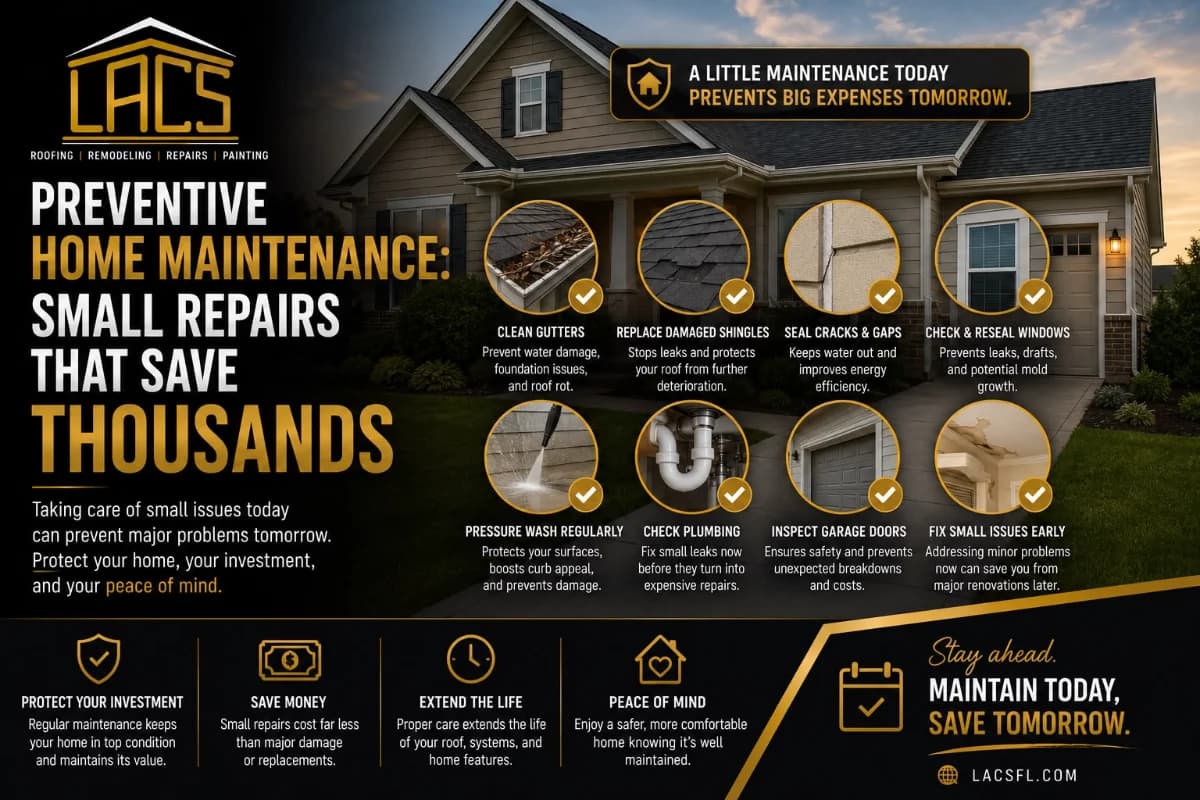
Preventive Home Maintenance: Small Repairs That Save Thousands
Prevent costly home disasters with a simple preventive maintenance routine: monthly checks, fast small repairs, and a realistic budget to avoid emergencies.
Are You Seriously Waiting for a $12 Fix to Turn Into a $12,000 Home Disaster?
Preventive home maintenance is how you stop tiny problems—slow leaks, clogged gutters, dirty HVAC coils, loose caulk—from snowballing into mold remediation, roof rot, foundation cracks, and emergency replacements. The smartest approach is simple: inspect on a schedule, fix fast, and budget realistically so “small repairs” stay small and affordable instead of becoming major financial hits.
Introduction
A common (and expensive) belief is that home maintenance only matters when something breaks. Reality: most major repairs start as boring little issues you could have caught in minutes—water where it shouldn’t be, air not flowing correctly, or small gaps letting pests and moisture in.
Once you understand that maintenance is risk management, everything changes. You stop reacting to emergencies and start preventing them. That means fewer surprise costs, less stress, and a house system (roof, HVAC, plumbing, electrical, exterior) that lasts longer on the same budget.
The goal of this guide is practical: focus on the small fixes that protect your home’s biggest components, show you what to check and when, and help you plan financially so repairs don’t collide with your emergency fund or monthly bills.
Your home is already giving you warning signs—drips, musty smells, uneven cooling, doors sticking—and ignoring them is how “small repairs” become major repair costs. If you wait until it’s an emergency, you’ll pay rush pricing, face bigger damage, and lose control of your budget. Talk to LACS now and get clear guidance on urgent fixes and affordable repair options before the next breakdown.

Table of Contents
- The 30-minute monthly checklist that prevents the biggest home repairs
- Water damage prevention: the small plumbing fixes that save the most money
- HVAC preventive maintenance: cheap tune-ups that prevent expensive failures
- Exterior and roof maintenance: stop rot, leaks, and pest entry before they spread
- Electrical and safety checks: prevent hazards without overpaying
- Budgeting for home maintenance: how much to save every month (without guessing)
- When to DIY vs. when to hire help (and how to keep costs affordable)
The 30-minute monthly checklist that prevents the biggest home repairs
Most homeowners don’t need more tools—they need a repeatable system. A 30-minute monthly walk-through catches water leaks, HVAC airflow issues, and exterior gaps early enough to fix cheaply. The payoff is avoiding emergency calls and preventing small problems from turning into major repairs that wreck your budget.
Start by treating your house like a set of systems (water, air, structure). Walk the same route every month so you notice changes.
Quick monthly checklist (set a recurring calendar reminder):
- Look under every sink for moisture, staining, or warped cabinet bottoms.
- Check ceilings for faint rings (early leak evidence).
- Run exhaust fans; weak airflow can signal duct or vent blockage.
- Replace/clean HVAC filters if needed; note unusual noises.
- Walk the exterior perimeter: look for cracked caulk, peeling paint, soil grading issues.
- Test GFCI outlets and smoke/CO alarms.
Keep a simple log in your phone: date + what you saw + what you fixed. Patterns matter (a “recurring” drip is never random).
To better understand which maintenance tasks actually pay for themselves and why they reduce repair costs, see also the article 7 Home Maintenance Tasks That Can Pay for Themselves.
Water damage prevention: the small plumbing fixes that save the most money
If you want the highest return on preventive maintenance, chase water first. Small plumbing problems—slow leaks, failing caulk, loose toilet bases—quietly destroy cabinets, subfloors, drywall, and even structural framing. Fixing them early is usually affordable; delaying turns it into mold cleanup and major reconstruction.
Focus on three high-risk zones: kitchens, bathrooms, and laundry areas.
Small repairs that prevent big damage:
- Replace worn supply lines (especially old plastic) with braided stainless lines at sinks/toilets.
- Re-caulk tubs/showers when you see gaps or mildew that returns quickly after cleaning.
- Stop toilet movement immediately—rocking toilets can break seals and rot subfloors.
- Clean slow drains before clogs force backups (use mechanical methods first; avoid harsh chemicals repeatedly).
- Check water heater area for corrosion at fittings or pooling water; a “tiny” leak can become a sudden failure.
A simple rule: if water is leaving its pipe—or staying where it shouldn’t—treat it as urgent even if it’s small.
To better understand how homeowners plan for expected vs. unexpected repair costs so leaks don’t become emergencies, see also the article how do you guys save for expected and unexpected home ....
HVAC preventive maintenance: cheap tune-ups that prevent expensive failures
HVAC failures are rarely sudden—they’re usually neglected maintenance catching up all at once. Basic upkeep (filters, drain lines, coil cleanliness) protects comfort and prevents high repair costs like compressor damage or blower motor burnout. A small tune-up is cheaper than emergency service during peak season.
Here’s what to prioritize because it affects both performance and lifespan:
DIY-friendly maintenance (monthly/quarterly):
- Change filters on schedule based on pets/dust/allergies.
- Keep outdoor condenser clear (leaves/debris reduce efficiency).
- Flush condensate drain line if recommended for your system to prevent clogs and water damage near the air handler.
Pro maintenance (typically yearly):
- Full system inspection: refrigerant checks (as applicable), electrical connections tightened, coils evaluated/cleaned if needed.
Watch for early warning signs: uneven temperatures between rooms, rising utility bills without lifestyle changes, short cycling (turning on/off frequently), or new rattles.
To better understand typical annual maintenance costs by system—including HVAC servicing ranges—and how to plan for them, see also the article Budgeting for Home Maintenance and Repairs.
Exterior and roof maintenance: stop rot, leaks, and pest entry before they spread
Exterior neglect gets expensive because it invites water intrusion and pests—two things that multiply damage fast. The “small repairs” here are mostly cleaning and sealing: gutters flowing correctly, caulk intact, paint protecting wood, branches not scraping roofing or siding.
Start with what moves water away from your house:
High-impact exterior fixes:
- Clean gutters/downspouts so water doesn’t back up under shingles or overflow onto fascia boards.
- Extend downspouts so runoff doesn’t pool near the foundation.
- Seal penetrations (around vents/pipes) where tiny gaps become leak paths.
- Trim branches away from rooflines to reduce wear and storm damage risk.
- Patch small cracks in exterior caulk/paint before wood swells and rots.
Also check grading: soil should slope away from the house so rain doesn’t sit against the foundation wall.
To better understand why budgeting by home value or square footage helps cover recurring exterior upkeep before it becomes a major repair, see also the article How Much To Budget for Home Maintenance.
Electrical and safety checks: prevent hazards without overpaying
Preventive electrical maintenance isn’t about opening panels unless you’re qualified—it’s about catching warning signs early and fixing safety issues before they become dangerous or costly. Small problems like loose outlets or tripping breakers can indicate overheating risks or overloaded circuits.
Do these checks routinely:
Simple safety fixes most homeowners can handle (or schedule quickly):
- Replace cracked outlet/switch plates (they expose wiring edges).
- Tighten loose outlets (a loose receptacle can arc over time).
- Test GFCI outlets in kitchens/baths/outdoors monthly; replace if they won’t reset.
- Replace smoke/CO alarm batteries on schedule; replace aging units per manufacturer guidance.
Red flags that require professional help fast:
- Burning smell near outlets
- Warm wall plates
- Frequent breaker trips
- Flickering lights tied to appliance use
The money-saving angle is real: early diagnosis prevents repeated “mystery” issues—and reduces the odds of emergency electrical calls.
To better understand how to prioritize repairs so critical safety issues get handled first without breaking your budget, see also the article Affordable home repairs: 5 Smart Ways to Save Money.
Budgeting for home maintenance: how much to save every month (without guessing)
The fastest way to turn routine maintenance into financial stress is pretending it won’t happen this year. A smarter approach is building a dedicated repair fund so every repair—small or major—doesn’t compete with groceries or your emergency savings.
Two common budgeting methods work well:
1) Percentage method: Save roughly 1%–4% of your home’s value annually depending on age/condition (older homes trend higher).
2) Square-foot method: Save about $1 per square foot per year as a baseline—and adjust up for older systems or harsh climates.
Then convert it into a monthly transfer you automate. The key isn’t perfection; it’s consistency so you can handle repairs without panic pricing.
Also separate categories:
- Maintenance fund: predictable tasks (filters, gutter cleaning, tune-ups)
- Repair reserve: inevitable replacements (water heater aging out)
- Emergency fund: job loss/medical—not routine house needs
To better understand how insurers and planners think about average repair costs by component—and why planning early prevents financial surprises, see also the article How much should you save each year for maintenance on your home?.
When to DIY vs. when to hire help (and how to keep costs affordable)
DIY saves money only when it reduces total risk—not when it creates bigger problems you later pay someone else to undo. Preventive home maintenance has plenty of safe DIY wins (filters, caulk touch-ups), but some repairs should be hired out because mistakes get expensive fast.
Use this decision filter:
DIY is usually smart when:
- The fix is cosmetic/sealing (caulk gaps, weatherstripping)
- You can shut off power/water safely and verify it’s off
- The worst-case mistake is minor inconvenience—not structural damage
Hire help when:
- Water intrusion involves hidden areas (behind walls/ceilings)
- Electrical issues include breaker trips or heat signs
- Roof work requires climbing or walking steep pitches
- HVAC refrigerant/electrical components are involved
To keep costs affordable:
- Bundle tasks into one visit (“while you’re here” list)
- Ask for photos of problem areas
- Get clear scope in writing before work starts
To better understand practical DIY vs pro guidance plus ways to find financial help for essential repairs, see also the article Your Wallet-Friendly Guide to Home Repair Solutions.
Is Preventive Home Maintenance Actually Worth It If You’re On a Tight Budget?
Yes—because preventive maintenance isn’t “extra spending,” it’s controlled spending that keeps small repairs from becoming emergencies with premium pricing. When money is tight, avoiding one major surprise matters more than optimizing every minor cost. The strategy is prioritization: fix anything involving active water leaks first, then anything affecting HVAC performance in extreme seasons, then exterior drainage and sealing that prevents future damage. You don’t have to do everything at once; you need a schedule that matches your budget while still addressing high-risk items quickly. Even basic habits—monthly checks under sinks, changing filters on time, keeping gutters functional—reduce the odds of sudden failures that force loans or credit card debt. Preventive work buys time and predictability, which is exactly what most budgets need.
With Preventive Maintenance or Without It: What’s the Difference?
With preventive maintenance
- Small fixes stay small because problems are caught early
- Fewer emergencies mean fewer after-hours fees and rushed decisions
- Systems last longer (HVAC needs less strain; exteriors resist moisture)
Without preventive maintenance
- Hidden leaks grow until cabinets/floors/walls are damaged
- Breakdowns happen at the worst time (heat waves/cold snaps)
- Repair costs spike because multiple components fail together
Practical conclusion: preventive maintenance isn’t about perfection—it’s about reducing expensive surprises by acting while fixes are still affordable.
📌 Decision If you want to save money on home repairs this year, stop treating maintenance like optional chores and start treating it like protection for your budget. Every month you delay basic checks increases the chance that a slow leak becomes rot or mold, a dirty HVAC system becomes an emergency callout, or poor drainage becomes structural damage—all of which cost far more than small fixes done on time. Decide today what gets inspected monthly and what gets scheduled seasonally, then fund it automatically so you’re not forced into panic decisions later.
Conclusion
Preventive home maintenance works because it targets the real cause of huge repair costs: delay. Most “major” problems begin as minor issues—water drips, airflow restrictions, exterior gaps—that were visible long before they became emergencies.
Build a simple routine (monthly walk-through + seasonal tasks), prioritize water/HVAC/exterior drainage first, and automate a realistic savings amount so repairs don’t ambush your finances. To better understand how smart homeowners keep essential fixes affordable while still preventing emergencies, see also the article Affordable home repairs: 5 Smart Ways to Save Money.
Your house is costing you money right now through small problems you can’t see until they explode—hidden leaks, clogged drainage paths, HVAC strain—and waiting guarantees higher repair costs later. If you delay until something fails completely, you’ll pay emergency rates and face bigger damage across multiple systems. Talk to LACS now and get immediate direction on priority fixes that protect your home and keep repairs affordable.