5 Warning Signs Your Roof Needs Attention Before Hurricane Season
Spot 5 warning signs—missing shingles, gutter granules, water stains, sagging spots, and loose flashing—before hurricane winds turn them into leaks.
Are You About to Let Hurricane Winds Tear Your Roof Apart — Without Even Noticing?
If your roof has missing shingles, gritty granules in the gutters, indoor water stains, a sagging roofline, or loose flashing, it’s already asking for attention. Hurricanes don’t “create” most roof problems—they exploit small, existing damage and turn it into leaks, structural issues, and expensive interior water loss fast.
Introduction
A common belief is that if your roof isn’t actively leaking, it’s “fine” until the next big storm. The reality is harsher: hurricane winds and wind-driven rain punish weak points you can’t see from the driveway—lifted shingles, worn seal strips, loose flashing, and moisture that’s already working under the surface.
When you know the warning signs early, you stop treating roofing like an emergency expense and start treating it like prevention. That changes everything: you can schedule repairs before contractors are booked out, reduce the chance of severe water damage, and protect the parts of your home that are hardest (and most expensive) to dry out and rebuild.
Your roof is showing subtle red flags right now—loose shingles, gutter granules, or faint stains—and hurricane season will punish every one of them. If you wait until the first severe storm hits, small issues become active leaks, soaked insulation, and structural damage LACS can prevent. Talk to LACS now and get a real roof readiness plan before schedules fill up.

Table of Contents
- Missing or damaged shingles: the easiest way to lose your roof in high winds
- Granules in gutters: the “sand” that tells you shingles are failing
- Water stains inside: why one ceiling spot often means widespread moisture
- Sagging or soft spots: the structural warning homeowners ignore too long
- Loose flashing and clogged gutters: small metal and drainage issues that cause big leaks
- What to do first in spring: a practical pre-hurricane roof checklist
- Should you repair now or wait until after hurricane season?
- With a pre-season inspection or without it: what’s the difference?
Missing or damaged shingles: the easiest way to lose your roof in high winds
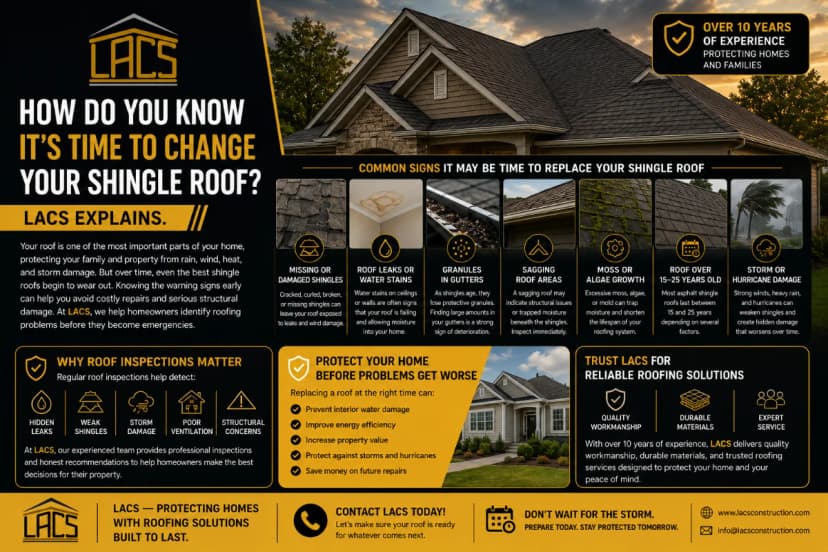
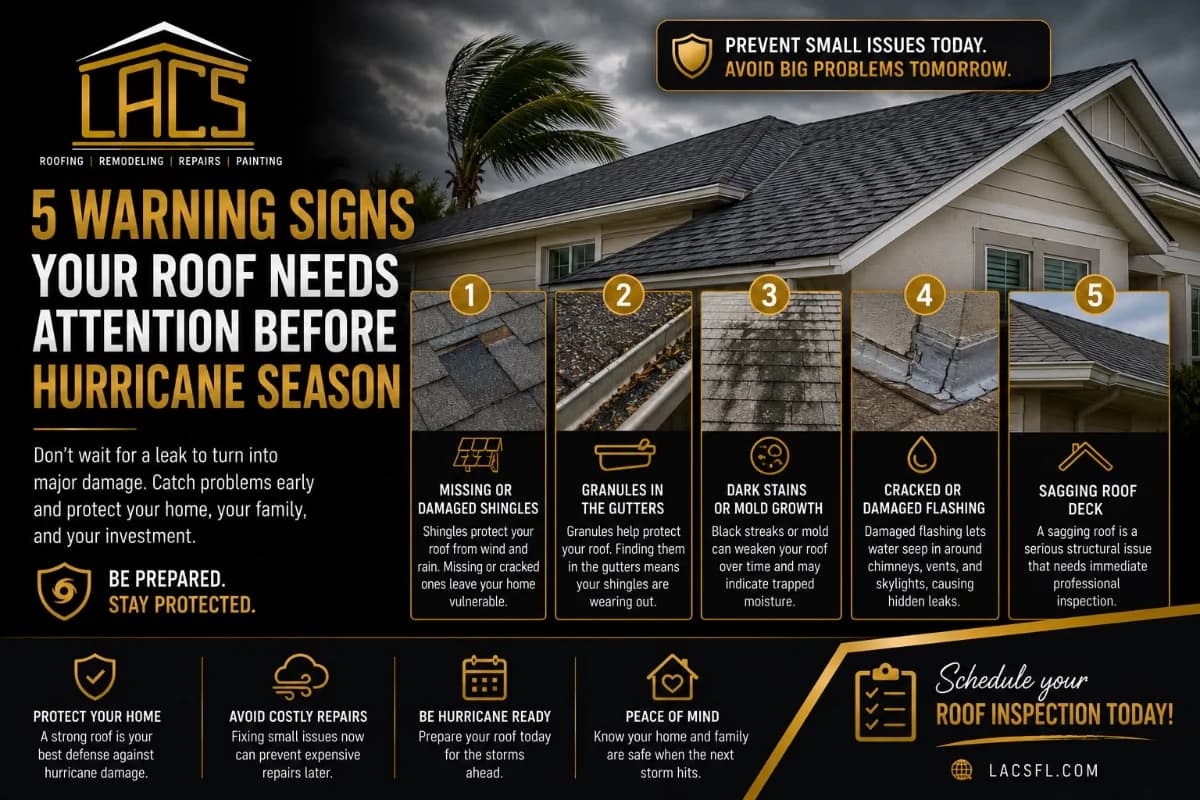
Missing, cracked, curled, or visibly loose shingles are a direct warning that your roof’s wind resistance is compromised. In hurricane conditions, wind doesn’t just “blow” on shingles—it gets underneath them, lifts them like tabs, and creates a chain reaction where one failure exposes the next layer fast.
Start with what you can safely see from the ground: bare patches, uneven shingle lines, or corners that look lifted. If you have access to binoculars, look for creased shingles (a horizontal line where wind has bent them back) and exposed nail heads.
Why this matters before hurricane season:
- Lifted shingles break the seal strip and become easy targets for gusts
- Missing shingles expose underlayment that isn’t meant for long-term UV and rain
- One weak slope often means similar wear across the whole roof plane
To better understand how proactive protection steps reduce storm-related roof loss before hurricane season, see also the article Hurricane Season Starts with Protection You Can Trust- LACS Has You Covered.
Granules in gutters: the “sand” that tells you shingles are failing
If your gutters or downspouts are collecting gritty material that looks like sand or pepper—those are shingle granules, and their loss is a classic sign your roofing is aging or has taken storm damage. Granules protect shingles from sun exposure and slow down deterioration; when they’re gone, shingles dry out, crack, and fail sooner.
Check after heavy rain or wind events (and especially in spring). Look in:
- Gutter corners and end caps
- Downspout elbows
- Splash blocks at ground level
What granule loss usually signals:
- Normal aging near end-of-life roofing
- Wind damage where tabs have been flexing repeatedly
- Heat wear where shingles are becoming brittle
- Manufacturing defects (less common but possible)
Granules matter because hurricanes bring prolonged wind cycles—hours of gusting that keeps stressing already-thinned shingles until they tear away.
To better understand how roof checks fit into a full pre-season protection plan including drainage and exterior maintenance, see also the article Hurricane Season Starts with Protection You Can Trust- LACS Has You Covered.
Water stains inside: why one ceiling spot often means widespread moisture
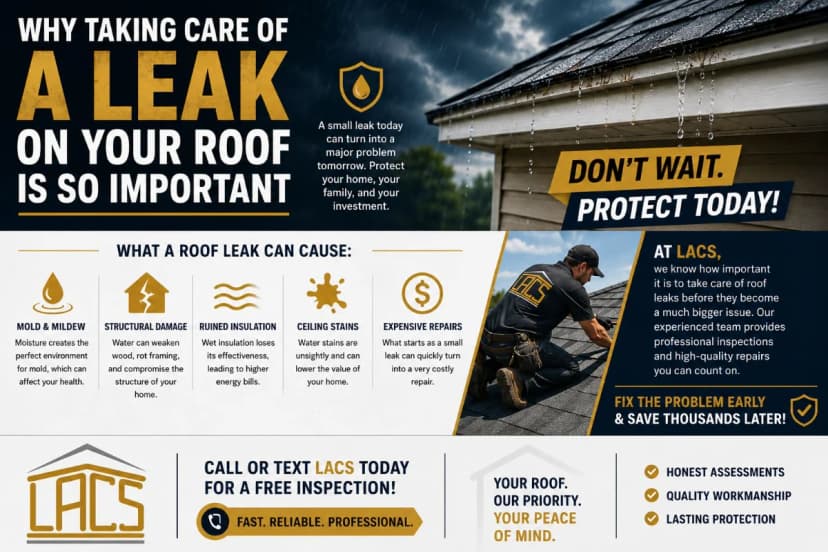
A yellow-brown ceiling stain, bubbling paint, damp drywall edges, or musty odors are not “minor cosmetic issues”—they’re evidence that water has already entered your home envelope. Before hurricane season, any interior stain should be treated as an active warning sign because wind-driven rain can push water uphill and sideways under roofing materials.
Where to look first:
- Ceiling corners near exterior walls
- Around vents, skylights, and chimneys
- Closet ceilings (often overlooked)
- Attic decking above stained rooms
Important reality: the leak entry point is often far from the stain. Water follows rafters, nails, insulation gaps, and gravity paths before it shows up indoors.
Quick homeowner triage (safe steps):
- Photograph stains (date-stamped if possible)
- Check attic for wet wood, darkened decking, or visible moisture trails
- Note whether stains grow after storms (even small ones)
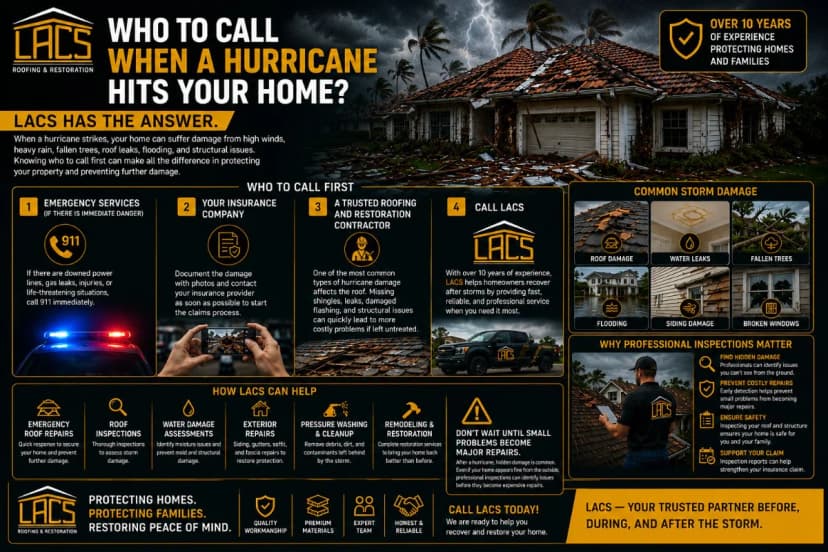
To better understand who to call first when storm damage escalates into urgent tarping or emergency repairs, see also the article Who Should You Call When a Hurricane Hits Your Home?.
Sagging or soft spots: the structural warning homeowners ignore too long
A sagging roofline or soft areas underfoot (on walkable roofs only—don’t climb if you’re not trained) can indicate trapped moisture, rotting decking, or weakened structural components. This is one of the most serious warning signs because hurricanes add uplift forces that stressed structures may not tolerate.
From the ground, watch for:
- A dip along ridges or valleys
- Wavy shingle lines (not just cosmetic—sometimes decking movement)
- Uneven fascia lines near gutters
Inside the attic (with a flashlight), look for:
- Darkened wood sheathing
- Mold-like spotting (often moisture related)
- Nails with rust halos (a moisture clue)
Why this becomes critical in severe winds: if decking has softened from repeated small leaks, fasteners lose holding power. That makes it easier for sections to lift under gusts.
To better understand how early preparation reduces structural risk by addressing weak points before hurricane season begins, see also the article Hurricane Season Starts with Protection You Can Trust- LACS Has You Covered.
Loose flashing and clogged gutters: small metal and drainage issues that cause big leaks
Loose flashing around chimneys, vents, pipe boots, and roof-to-wall transitions is one of the most common sources of hurricane leaks—because flashing is designed to manage water flow under normal rain patterns, not pressurized wind-driven rain trying to force its way inside.
At the same time, clogged gutters create overflow that soaks fascia boards and pushes water behind drip edges—exactly where rot starts quietly.
Warning signs to take seriously:
- Flashing that looks lifted or bent
- Cracked sealant beads around penetrations
- Rusted metal edges or missing fasteners
- Gutters pulling away from fascia
- Water marks behind gutters after rain
A practical approach before season:
- Clear debris (leaves, pine needles) in spring
- Confirm downspouts discharge away from foundation
- Have flashing inspected—not just “caulked over”
To better understand how drainage and exterior maintenance work together with roof readiness to reduce storm damage, see also the article Hurricane Season Starts with Protection You Can Trust- LACS Has You Covered.
What to do first in spring: a practical pre-hurricane roof checklist
The best time to act is spring—before contractor schedules tighten and before your first tropical system forces rushed decisions. A simple checklist helps you catch problems while they’re still small enough to repair instead of replace.
Start with these high-impact steps:
- Ground inspection: walk your perimeter; look for missing shingles, debris impact marks, exposed flashing
- Gutter check: confirm water flows freely; look for granules piling up
- Attic scan: use a flashlight; check for stains on decking and around penetrations
- Interior scan: note ceiling stains, peeling paint near vents/windows (moisture can travel)
- After any severe weather: re-check vulnerable areas immediately
If anything looks questionable—don’t “wait for one more storm.” Hurricanes exploit weak points you could have fixed in a normal service visit.
To better understand what happens after a hurricane hits—including who to call in what order when there’s danger or active leaking, see also the article Who Should You Call When a Hurricane Hits Your Home?.
Should you repair now or wait until after hurricane season?
Repairing before hurricane season is almost always cheaper—and safer—than waiting. The reason is simple: storms don’t politely limit damage to what was already broken. They magnify it by adding uplift pressure, flying debris impacts, and wind-driven rain that finds every loose edge.
If you wait: You risk turning a manageable shingle repair into soaked insulation, stained ceilings, warped drywall, mold-friendly moisture conditions, and even electrical hazards depending on where water travels.
If you act now: You typically get better scheduling availability, clearer diagnostics (dry conditions reveal true problem areas), and fewer emergency premiums for rush work.
The best decision rule:
- If you see any of these—missing shingles, recurring stains, sagging sections, heavy granule loss—treat it as pre-season required work.
- If your roof is older and showing multiple signs at once, ask for an evaluation that considers repair vs replacement realistically.
To better understand how proactive protection planning—including waterproofing priorities—fits into hurricane preparation, see also the article Hurricane Season Starts with Protection You Can Trust- LACS Has You Covered.
With a pre-season inspection or without it: what’s the difference?
With a pre-season inspection
-
You find loose shingles/flashing before winds rip them off
-
You address small leaks before they become widespread moisture problems
-
You can plan repairs on normal timelines instead of emergency pricing
-
You reduce uncertainty about how your home will perform in severe weather
Without a pre-season inspection
-
You discover problems during active storms when water is already entering
-
Temporary tarping becomes your first move instead of targeted repair
-
Contractor availability shrinks fast after major weather events
-
Interior damage (ceilings, insulation) becomes part of your roofing bill
Practical conclusion: if hurricane season is approaching and you’ve noticed even one warning sign—granules in gutters or faint stains—getting eyes on the roof now is how you avoid paying for avoidable damage later.
📌 Decision If your roof is dropping granules into gutters, showing missing shingles, staining ceilings, sagging anywhere along the line, or letting moisture linger in the attic, you don’t “monitor it”—you fix it before hurricane winds arrive. Every month you delay increases how much water can enter during one severe storm cycle and multiplies repair scope from roofing to drywall and insulation. Those who wait until a hurricane hits end up making rushed calls under stress while damage spreads hour by hour; act now while choices are still yours.
Conclusion
Hurricane season doesn’t reward optimism—it rewards preparation. The five warning signs that matter most are visible shingle problems (missing/curling), granule loss in gutters, interior water stains or moisture clues, sagging/soft structural areas, and loose flashing plus drainage issues that force water where it shouldn’t go.
If any of these are showing up this spring, treat them as time-sensitive—not because you’re panicking, but because hurricanes exploit existing weaknesses faster than most homeowners expect.
To better understand the full sequence of who to contact when storm conditions create urgent hazards or active leaks, see also the article Who Should You Call When a Hurricane Hits Your Home?.
Your roof is giving you warnings right now—granules in gutters, lifted shingles, damp attic wood—and hurricane season will turn them into real damage fast. If you delay repairs until contractors are overwhelmed after storms hit, costs rise while your home takes on more water than necessary. Talk to LACS now and lock in an inspection/repair plan before peak season chaos starts.