Small Roof Leak Today… Major Damage Tomorrow!
A small roof leak can cause major hidden damage fast. Learn first-hour steps, common leak sources, temporary fixes, and when to call a roofer.
Are You Seriously Ignoring a Roof Leaking Because “It’s Just a Small Drip”?
A roof leaking is never “just” a drip. Water travels, hides, and keeps working even when the rain stops—so a small leak today can become a major problem tomorrow: ruined insulation, stained ceilings, mold-friendly moisture, and rotting wood. If you’re asking “why should I fix it,” the answer is simple: delay multiplies damage and cost fast.
Introduction
A common belief is that a small roof leak only matters if you see a steady drip or a big ceiling stain. The reality is harsher: most leaks spread sideways through roofing layers, insulation, and framing long before they show up inside your home.
Once water finds a path, it repeats that path every time it rains—especially after heavy storms—so the “minor” issue becomes a major problem quietly. What changes when you understand this? You stop treating roof leaking like an inconvenience and start treating it like active property damage that needs fast containment and professional repair planning.
Your ceiling isn’t the problem; it’s the symptom. Your roof system is already compromised—and the clock is running.
You’re hearing the drip, seeing water spots, or smelling dampness right now—and you’re hoping it will “dry out” on its own. If you wait, that roof leaking can turn into hidden moisture damage in insulation, wood framing, and walls that costs far more than a straightforward repair. Talk to LACS now and get a clear plan to stop the leak fast and prevent tomorrow’s major problem.

Table of Contents
- Why a Small Roof Leak Becomes a Major Problem So Fast
- What to Do in the First Hour When Your Roof Is Leaking
- The Real Damage Path: Where Water Goes After It Gets In
- Most Common Leak Sources: Shingles, Flashing, Vents, and Valleys
- Temporary Fixes vs. Real Roof Repair: What Actually Works
- When to Call a Professional Roofer (and What to Ask)
- Is Fixing a Roof Leak Immediately Really Worth It?
- With Fast Roof Repair or Without It: What’s the Difference?
Why a Small Roof Leak Becomes a Major Problem So Fast
A roof leaking rarely stays “small” because water doesn’t politely drop straight down and stop. It spreads through layers, saturates insulation, and keeps wood damp long enough to weaken it. That’s why should I fix it has one answer: because time turns manageable repairs into major problem restoration.
Water intrusion accelerates damage in three ways: repetition, absorption, and concealment. Every rain event reloads moisture into the same pathway. Insulation acts like a sponge—once wet, it holds water against wood framing and drywall. And because the leak path can run along rafters or trusses, you might see staining far from the actual entry point.
Common escalation patterns homeowners miss:
- A small ceiling spot becomes bubbling paint and sagging drywall
- A minor drip becomes wet insulation, higher energy bills, and musty odors
- A tiny flashing gap becomes wood rot around chimneys or vents
If you want proof that disciplined maintenance prevents repeat issues (not just quick patches), To better understand what long-term roof care looks like when done consistently, see also the article A Decade of Excellence. One Trusted Name: LACS.
What to Do in the First Hour When Your Roof Is Leaking
If your roof is leaking right now, your goal in the first hour is not heroics—it’s damage control and safety. Contain water inside, reduce moisture exposure, and avoid risky roof climbing. Fast action limits ceiling damage, wall staining, and electrical hazards while you line up proper repair.
Start with what’s happening inside your home first—because that’s where damage spreads fastest.
Do this immediately:
- Catch the drip with a bucket or container; add towels to prevent splashing
- Move valuables (electronics, rugs, furniture) away from the wet zone
- If the ceiling is bulging, relieve pressure carefully by making a small hole in the lowest point so water drains into your bucket (prevents sudden collapse)
- If water is near lights/outlets, turn off power to that area at the breaker
- Take clear photos for documentation before you disturb too much
What not to do: climb onto a wet roof during heavy rain or wind. Slips happen fast, and one fall becomes a bigger emergency than the leak.
For homeowners who want predictable scheduling and clear scope when urgent repairs hit, To better understand how an organized contractor approach prevents delays and surprise add-ons, see also the article Why Choose LACS for Your Next Project.
The Real Damage Path: Where Water Goes After It Gets In
Roof leaking damage isn’t limited to what you see on the ceiling. Water often enters at one point (like flashing) and appears somewhere else after traveling along wood or under shingles. That hidden travel is exactly how a small leak turns into major damage tomorrow—because moisture sits where you can’t monitor it.
Here’s where water commonly goes after entry:
- Underlayment layers: water can run under shingles before dropping into decking seams
- Roof decking (wood sheathing): repeated wetting leads to soft spots and eventual rot
- Insulation: loses R-value when wet; can stay damp long after rain ends
- Ceiling drywall: stains first; then swells, crumbles, or collapses
- Wall cavities: moisture can wick downward into walls and baseboards
A key detail many homeowners miss: even if the drip stops when rain stops, moisture may remain trapped in insulation or wood—creating conditions for mold growth and odor.
If you’ve ever wondered why experienced crews emphasize systems (not just surface fixes), To better understand how consistent quality standards reduce repeat leaks over time, see also the article A Decade of Excellence. One Trusted Name: LACS.
Most Common Leak Sources: Shingles, Flashing, Vents, and Valleys
Most roof leaking problems come from predictable weak points—not mysterious “bad luck.” The biggest culprits are damaged shingles and failed flashing details around penetrations (chimneys, vents) where water is designed to be redirected. When those components loosen or crack, rain finds an easy route inside.
The most common sources include:
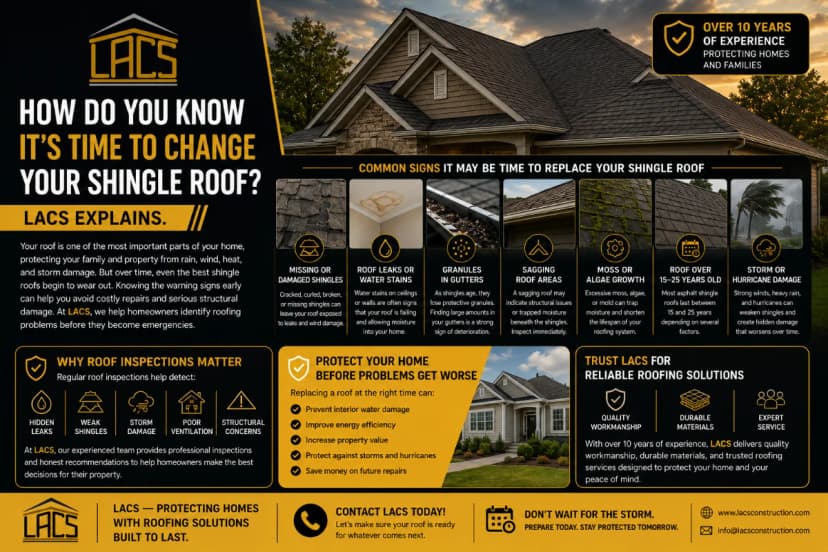
- Missing or cracked shingles from wind uplift or age-related brittleness
- Flashing failures around chimneys, skylights, plumbing vents, and sidewalls
- Valleys where two roof planes meet; debris buildup forces water sideways
- Nail pops that create micro-openings under shingle tabs
- Clogged gutters that push water back under roofing edges
In storm-prone periods or after heavy rain, tiny defects become leaks fast because volume overwhelms marginal seals.
If you’re trying to decide whether your situation needs targeted repairs or broader work—and you want clarity instead of guesswork—To better understand how a defined scope protects you from paying twice, see also the article Why Choose LACS for Your Next Project.
Temporary Fixes vs. Real Roof Repair: What Actually Works
A temporary fix can reduce interior damage today—but it does not solve roof leaking long-term unless the entry point is properly repaired. The danger is thinking “it stopped dripping” means “it’s fixed.” Often it just means conditions changed (wind direction, rainfall intensity), while moisture still sits in materials.
Temporary steps that help inside:
- Bucket + towels + dehumidifier/fans to reduce moisture load
- Plastic sheeting over belongings if multiple drips appear
- Controlled drainage from bulging drywall to prevent collapse
Short-term exterior measures (only if safe and dry enough):
- Tarping secured correctly over suspected area (not just weighted down)
- Sealing obvious gaps as an emergency measure—not as final repair
What real repair usually requires:
- Replacing damaged shingles or sections of underlayment
- Rebuilding flashing details properly (step flashing/counterflashing)
- Addressing ventilation issues that worsen condensation-related moisture
If you want confidence that repairs are built to last—not just patched until next storm—To better understand what “hire once, not twice” looks like in real property care, see also the article A Decade of Excellence. One Trusted Name: LACS.
When to Call a Professional Roofer (and What to Ask)
You should call a professional when your roof is leaking during active rain, when stains grow between storms, or when you can’t confidently identify the entry point without risk. Leak tracing is tricky because water travels; guessing wrong leads to wasted repairs while damage continues behind walls and ceilings.
Call quickly if you notice:
- Active dripping near lights/outlets (electrical risk)
- Multiple stains forming in different rooms (systemic failure)
- A musty smell in attic spaces (ongoing moisture)
- Shingle debris in gutters or yard after wind
Questions that separate real help from surface patching:
- “How will you confirm the leak source—not just where it shows inside?”
- “Will you inspect flashing details around vents/chimney/valleys?”
- “What repair method prevents recurrence in heavy rain?”
- “What should I dry out inside after repairs?”
A good contractor explains options clearly—repair vs replacement—and documents what they found.
For homeowners who value disciplined scheduling and transparent scope during urgent repairs, To better understand how project structure reduces downtime and surprise costs, see also the article Why Choose LACS for Your Next Project.
Is Fixing a Roof Leak Immediately Really Worth It?
Yes—fixing roof leaking immediately is worth it because you’re not paying only for roofing repairs; you’re preventing secondary damage that multiplies cost and disruption. Wet insulation loses performance right away, drywall deteriorates quickly once saturated, and wood stays vulnerable as long as moisture remains trapped in assemblies.
The question “why should I fix it” usually comes from hoping the issue will remain stable until it’s convenient. But leaks rarely respect schedules. They expand with each storm cycle as materials swell/dry repeatedly and fasteners loosen further.
Even when interior staining looks minor, there are two expensive unknowns: how far water traveled before showing up—and how long it has been happening unnoticed.
Immediate repair also protects resale value because documented water damage scares buyers and complicates inspections.
If you want an example of what proactive property care looks like over years—not just emergency reaction—To better understand how consistent service standards protect homes long-term, see also the article A Decade of Excellence. One Trusted Name: LACS.
With Fast Roof Repair or Without It: What’s the Difference?
With fast roof repair
- Leak source is identified early before moisture spreads deeper into insulation and wood
- Interior drying starts sooner, reducing lingering odor and mold-friendly conditions
- Repairs stay targeted (shingles/flashing/valley work) instead of expanding into ceilings and walls
Without fast roof repair
- Each rain event reloads water into hidden areas; stains are just late-stage symptoms
- Wet insulation underperforms; energy costs rise while materials stay damp
- Small defects become major problem restoration involving drywall removal, repainting, framing repair
Practical conclusion: if your roof is leaking today—even slightly—the cheapest outcome almost always comes from acting before the next heavy rain tests the same weak point again.
📌 Decision If your roof leaking has reached your ceiling at all, treat it as active damage—not an inconvenience—and act now. Every week you delay increases how much insulation gets soaked, how much wood stays wet, and how likely your “small” issue becomes a major problem that requires interior demolition instead of simple roofing repairs. Stop negotiating with time; contain the water today and schedule professional repair before the next storm makes the decision for you.
Conclusion
A small drip is not harmless—it’s evidence that your roof system has an opening where water can enter repeatedly. That’s why should I fix it isn’t really a question about convenience; it’s about preventing compounding damage to ceilings, walls, insulation, wood framing, and even electrical safety.
Contain interior water immediately, avoid unsafe roof access during storms, then get professional leak detection and repair so you’re fixing causes—not chasing stains.
To better understand how disciplined project planning helps homeowners avoid repeat repairs, see also the article Why Choose LACS for Your Next Project.
You’re looking at ceiling stains, hearing dripping during rain, or dealing with damp insulation smells right now—and every hour of delay lets moisture spread further into your home. If you wait for “a better time,” that roof leaking can become structural rot and expensive interior repairs instead of a straightforward fix today. Talk to LACS now and stop the leak fast with a clear repair plan built to last.