Who Should You Call When a Hurricane Hits Your Home?
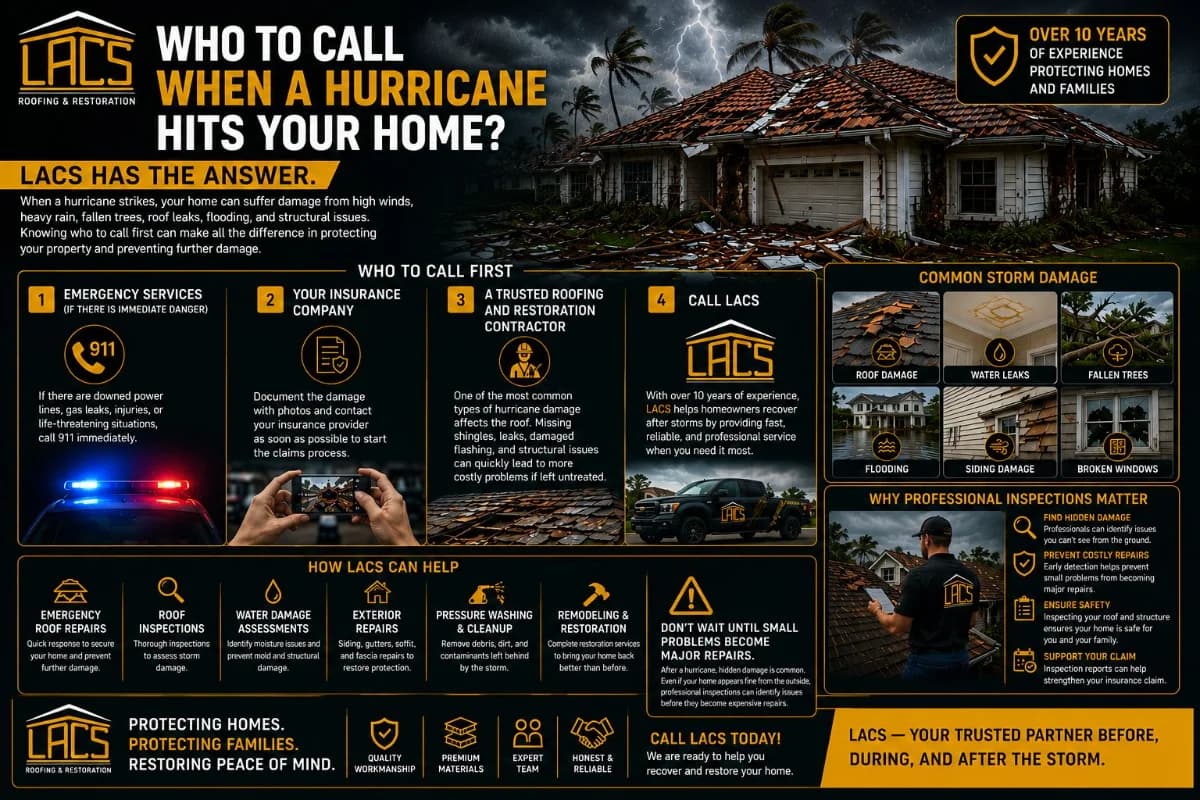
Hurricane damage? Call 911 for danger, then your insurer, then a licensed storm restoration contractor for tarping, board-up, and emergency repairs.
Stop Guessing: Who Do You Call First When a Hurricane Damages Your Home?
Call 911 if anyone is in danger, then call your insurance carrier to start the claim, and immediately contact a licensed storm restoration contractor to stop water intrusion (tarping, board-up, emergency repairs). If you wait, a small leak can spread fast, damage wall materials, and turn a re-roof into a full rebuild.
To better understand how LACS approaches construction projects with clear scope, predictable budgets, and disciplined scheduling, see also the article Why Choose LACS for Your Next Project.
Introduction
Most homeowners think the “right call” after a hurricane is simply whoever can show up fastest—any handyman, any roofer, any company with a truck. The reality is that hurricane damage is a chain reaction: wind compromises roofing, water finds the smallest opening, and within hours you can have a leak that soaks insulation, stains ceilings, and starts to damage wall assemblies from the inside out.
When you know who to call—and in what order—you stop the bleeding first (temporary protection), document everything for insurance, and then plan permanent repairs or a re-roof based on real inspection data. That shift prevents expensive redo work, denied claims, and months of living with preventable moisture problems.
Your next steps should be decisive, not emotional.
You’re staring at active leaks, wet drywall, and storm debris right now—and every hour you wait increases the cost of repairs and the risk of hidden mold and structural rot.
If you delay emergency protection, water keeps spreading behind paint and insulation and can turn a manageable re-roof into major interior reconstruction; LACS stops intrusion fast and scopes the right fix.
Talk to LACS now and get rapid guidance on emergency service steps, documentation, and the safest path to permanent restoration.

Table of Contents
- The First 60 Minutes After Hurricane Damage: Who to Call and What to Do
- Emergency Roof Tarping vs Re-Roof: How to Choose the Right Repair Path
- Leak Detection After a Storm: Where Water Actually Enters (and Why It’s Misleading)
- When Storm Water Starts to Damage Wall Systems: What Must Be Removed vs Dried
- Windows, Doors, and Board-Up Services: Preventing Theft and Secondary Damage
- Insurance Claims for Hurricane Repairs: Documentation That Protects You
- Commercial vs Home Storm Restoration: What Business Owners Must Do Differently
The First 60 Minutes After Hurricane Damage: Who to Call and What to Do
In the first hour after a hurricane hits your house or property, your job is life safety, then stop water, then document damage. Call emergency services if there’s danger; call your insurer to open a claim; then call a qualified contractor for emergency roofing repair like tarping and board-up so leaks don’t keep spreading into ceilings and damage wall cavities.
Start with a quick triage that prevents compounding repairs:
- If there’s immediate danger (downed lines, gas smell, unstable structure): call 911 and leave.
- Shut off utilities if safe: electricity (if flooding), gas (if you smell it), water (if lines broke).
- Photograph/video everything before moving items: roof areas visible from ground, broken windows, wet rooms, fallen trees.
- Prevent additional water intrusion: temporary tarp on compromised roofing; board broken windows; cover exposed openings.
- Avoid DIY roof climbing: wet decking + wind debris = serious fall risk.
A common mistake is “waiting for daylight” while an active leak continues overnight; that single delay can soak insulation and expand staining across multiple rooms—multiplying repairs dramatically.
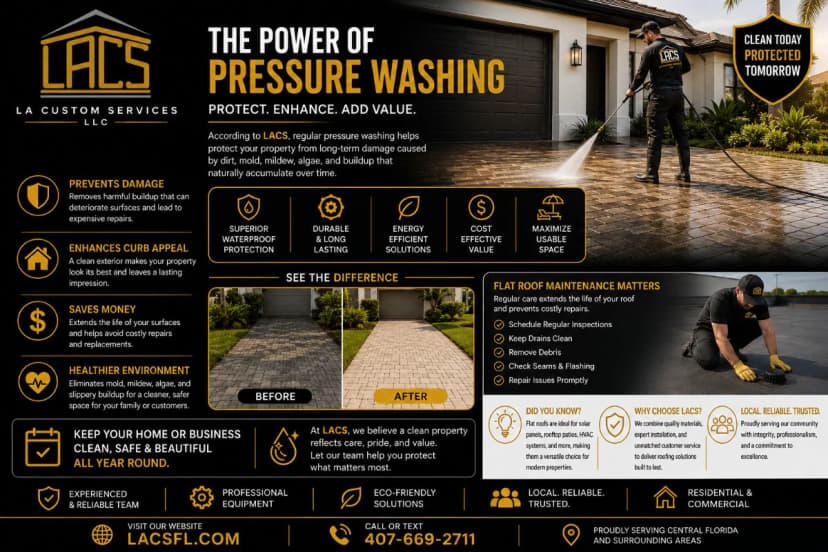
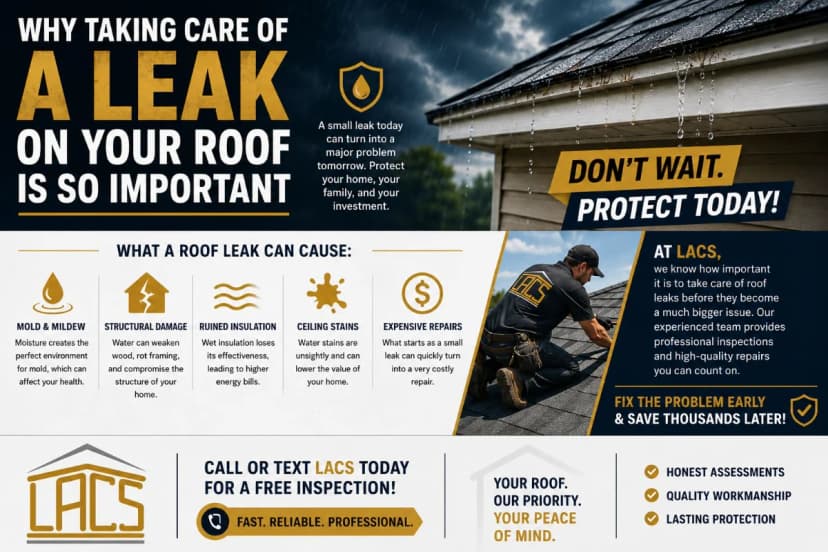
To better understand how small leaks escalate into major hidden damage and what to do in the first critical window, see also the article Small Roof Leak Today… Major Damage Tomorrow!.
Emergency Roof Tarping vs Re-Roof: How to Choose the Right Repair Path
You don’t decide “re-roof or repairs” based on how bad it looks from the driveway—you decide based on whether the roof system is still watertight and structurally sound after wind events. Emergency tarping is meant to stop leaks today; a re-roof is needed when shingles/underlayment/flashing failures are widespread or decking is compromised.
Here’s how pros separate short-term service from permanent restoration:
Emergency repairs (tarping/patching) make sense when:
- The leak source is localized (one impact point or limited missing shingles).
- Flashing lifted in one area but decking is intact.
- You need immediate protection while insurance processes.
A re-roof becomes likely when:
- Multiple slopes have missing or creased shingles from wind uplift.
- Underlayment is torn or exposed across broad areas.
- You have repeated leaks in different rooms (multiple entry points).
- Decking feels soft/spongy or shows water saturation.
The goal is not “the cheapest fix,” it’s the fix that won’t fail in the next storm. A rushed patch on an aging roof often becomes double spending—first for temporary repairs, then again for replacement after the next weather event exposes new weak points.
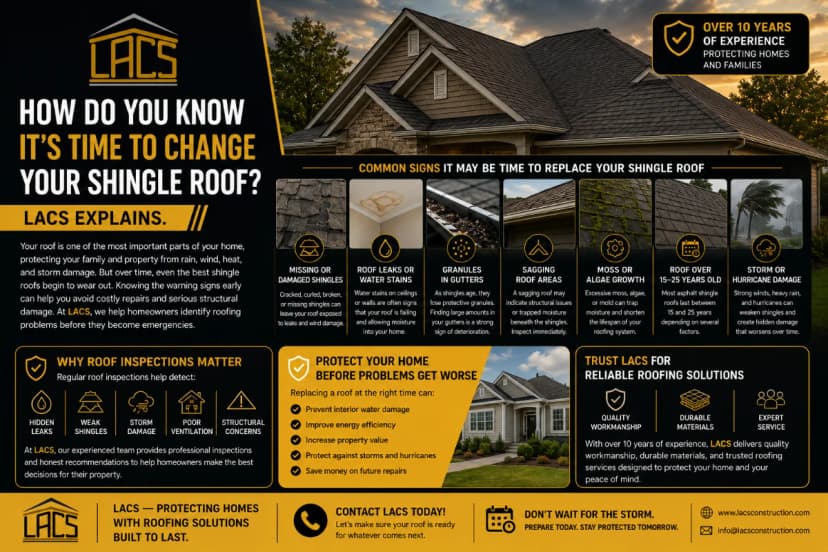
To better understand how to tell if your shingle roof needs repair versus full replacement after wear or storm damage, see also the article How Do You Know It’s Time to Replace Your Shingle Roof? — LACS Explains.
Leak Detection After a Storm: Where Water Actually Enters (and Why It’s Misleading)
After hurricane weather, the visible drip is rarely where water enters; it’s just where it exits after traveling along rafters, decking seams, insulation, or wiring paths. To stop leaks for good—and avoid repeat repairs—your contractor must trace entry points at roofing penetrations, flashing transitions, ridge/hip caps, valleys, and wind-driven rain vulnerabilities around vents and chimneys.
Why homeowners get misled:
- Water travels sideways under shingles when wind drives rain uphill.
- A “roof leak” might be window/soffit infiltration that runs inside walls.
- Saturated insulation can hold water and release it slowly—making it look like an ongoing leak even after rain stops.
What a proper storm inspection includes:
- Exterior scan of shingles/tile edges for uplift or breakage
- Flashing checks at walls/valleys/penetrations
- Attic inspection for wet decking lines and nail pops
- Moisture mapping inside ceilings/walls near stains
- Temporary stabilization first, then permanent repair plan
If your home has tile roofing or mixed roof planes, leak paths can be even less intuitive because failures often occur at underlayment transitions rather than obvious surface breaks.
To better understand how tile roof systems fail in real life and how maintenance prevents recurring leaks, see also the article LACS Tells You Everything You Need to Know About Tile Roofs.
When Storm Water Starts to Damage Wall Systems: What Must Be Removed vs Dried
If storm water has started to damage wall materials—drywall bubbling, baseboards swelling, paint peeling—the priority is preventing trapped moisture from turning into long-term structural decay or mold growth. Some materials can be dried if addressed quickly; others must be removed because they hold contamination or lose integrity once saturated.
A practical rule set used in restoration:
Often removable (especially if swollen/soft):
- Drywall that wicked water above the baseboard line
- Insulation (fiberglass batts lose performance when soaked)
- MDF baseboards/trim that expanded
- Carpet pad that held dirty water
Sometimes salvageable with fast action:
- Solid wood framing (if dried properly)
- Some plaster walls (case-by-case)
- Hard surfaces like tile/concrete once cleaned and dried
Key decisions depend on how long materials stayed wet and whether water was clean rainwater or contaminated floodwater entering from outside grade level. Delaying removal can lock moisture behind paint films—so you “fix” stains while rot continues unseen inside the wall cavity. That’s how minor interior repairs become major reconstruction months later.
To better understand which home improvements meaningfully increase safety by preventing hidden moisture problems, see also the article How Home Improvements Elevate Comfort, Safety, and Emotional Well-Being.
Windows, Doors, and Board-Up Services: Preventing Theft and Secondary Damage
When hurricanes break windows or compromise doors/garage openings, board-up service isn’t cosmetic—it’s how you prevent secondary losses that insurance may treat differently than initial storm damage. Wind-driven rain through one broken window can destroy flooring and damage wall finishes across multiple rooms; unsecured openings also invite theft during neighborhood-wide outages.
What “good board-up” actually means:
- Use appropriately sized plywood/fasteners (not random scrap boards)
- Protect frames so later window replacement isn’t harder than it needs to be
- Seal obvious gaps temporarily to reduce wind-driven rain entry
- Document each opening before covering it for insurance records
Also check these overlooked entry points:
- Broken screens hiding cracked glass
- Loose sliding door tracks allowing water intrusion
- Garage door panels bowed inward (a major pressure failure risk)
After board-up stabilizes the house envelope, you can plan permanent repairs—window replacement coordination with interior drying timelines matters so you don’t trap moisture inside newly sealed spaces.
To better understand how pre-season protection reduces emergency board-up needs and limits storm-driven interior damage, see also the article Hurricane Season Starts with Protection You Can Trust- LACS Has You Covered.
Insurance Claims for Hurricane Repairs: Documentation That Protects You
Insurance claims go smoother when you treat documentation like evidence: clear photos/videos before cleanup, written notes of timelines, receipts for emergency services, and an itemized list of damaged contents by room. The biggest claim mistakes happen when homeowners throw away materials too early or start major repairs without documenting pre-existing conditions versus storm-created damage.
Use this simple documentation workflow:
- Open the claim early even if you’re unsure of full scope; delays can create disputes about when damage occurred.
- Take wide shots + close-ups of roofing issues (missing shingles/tile displacement), leaks/stains, damaged wall sections, broken windows/doors.
- Keep samples of damaged materials when possible (a piece of shingle/flashing) in a labeled bag.
- Save all invoices for emergency repairs like tarps or board-up; these often support reimbursement as mitigation costs.
Important nuance: insurers expect you to mitigate further loss—meaning temporary protection isn’t optional just because adjusters are busy after a disaster event.
If you feel pressured into quick cosmetic fixes (paint over stains), push back—those shortcuts can hide ongoing moisture problems that later become your financial responsibility when coverage disputes arise about “long-term seepage.”
To better understand why hiring one disciplined contractor reduces rework during insurance-driven restoration projects, see also the article A Decade of Excellence. One Trusted Name: LACS.
Commercial vs Home Storm Restoration: What Business Owners Must Do Differently
Commercial storm restoration moves faster—and punishes delays harder—because every day closed is lost revenue plus increased liability exposure for customers and staff. While home hurricane repairs focus on livability and protecting personal property, commercial services prioritize code compliance, occupant safety documentation, temporary weatherproofing at scale, and phased reopening plans while permanent roofing repair continues overhead safely.
Key differences business owners should act on immediately:
- Safety perimeter control: restrict access under damaged roof areas; document signage/barriers used after wind events.
- Moisture + electrical coordination: wet ceiling grids near lighting/HVAC require careful shutdown planning before cleanup crews enter.
- Inventory triage: protect stock from leaks with palletizing/plastic wrap; move high-value items first.
- Phased repairs: tarp/temporary membrane now; schedule re-roof sections strategically to minimize downtime.
Even if you’re not in Florida—whether you’re managing property in Philadelphia or another storm-prone area—the operational logic stays consistent: stabilize first so interior damage doesn’t spread through walls and ceilings while you wait for approvals.
To better understand how proactive hurricane-season planning reduces emergency downtime and limits large-scale restoration costs, see also the article Hurricane Season Starts with Protection You Can Trust- LACS Has You Covered.
Should You Start Repairs Immediately After a Hurricane—or Wait for Insurance?
Start emergency repairs immediately to stop active leaks and prevent additional damage wall deterioration; waiting usually costs more than it saves. Insurance typically expects reasonable mitigation (tarping holes in roofing, boarding windows) while permanent restoration waits for adjuster review if needed. The smart approach is stabilize now, document thoroughly now, then execute permanent repairs once scope is confirmed.
Delays create two problems at once: physical deterioration and paperwork complications. Physically, moisture spreads behind surfaces where you cannot see it—so what looked like one ceiling stain becomes wet insulation bays across multiple rooms within days of humid weather following storms. Administratively, late reporting makes it easier for an insurer to argue that some portion of damage developed over time rather than being caused by one hurricane event.
The best middle ground is simple: authorize temporary emergency service immediately (tarp/board-up/water extraction), keep all receipts/photos/time stamps, then coordinate re-roof decisions or interior rebuild sequencing after inspection data supports it.
If anyone tells you “do nothing until we inspect,” ask them—in writing—whether they will accept responsibility for additional damages caused by waiting while your home continues leaking.
With Professional Storm Restoration or Without It: What’s the Difference?
With professional storm restoration: you get rapid stabilization that stops leaks fast; inspections that trace true entry points instead of guessing; documented scope aligned with insurance expectations; and coordinated trades so roofing repair doesn’t trap moisture inside walls or ceilings during rebuild sequencing.
Without professional storm restoration: homeowners often patch symptoms instead of causes; miss hidden moisture that later damages wall framing; lose claim leverage due to poor documentation; and pay twice—first for rushed repairs, then again when recurring leaks force a re-roof under worse conditions.
Practical conclusion: if your house took hurricane damage—especially roofing breaches or repeated leaks—professional assessment plus emergency service is not an upgrade; it’s how you prevent secondary losses that explode budgets.
📌 Decision If your home was hit by hurricane weather and you have any leak at all—or even suspicion of one—you need emergency stabilization today and a real inspection tomorrow, not guesswork next week. Every day you delay allows water to migrate farther into insulation bays and damage wall materials invisibly; by the time stains show up clearly, you’re already paying for bigger repairs than necessary. Call professionals who can tarp/board-up immediately and plan durable restoration before minor damage becomes structural rot.
Conclusion
When a hurricane hits your home, the right call sequence is simple but strict: protect people first, stop water second, document everything third—and only then plan permanent repairs or a re-roof based on inspection evidence rather than panic decisions. That order prevents small leaks from becoming widespread interior damage wall failures that take months to unwind.
If you want fewer surprises later, treat emergency service as non-negotiable mitigation—not optional cleanup—and choose contractors who can stabilize fast while building a clear scope for lasting restoration.
You’re dealing with active leak risk right now—wet ceilings today become damaged wall cavities tomorrow if water keeps moving through your house overnight.
If you wait to stabilize roofing breaches or broken windows, secondary moisture damage multiplies repair costs fast; LACS helps you secure openings immediately and map out durable restoration work with clear next steps.
Talk to LACS now and get direct guidance on what to do tonight versus what can safely wait until inspections are complete.