Why Experience Matters When Working on Your Roof
Hiring an experienced roofer prevents leaks, repeat repairs, and warranty issues. Learn how expertise improves installation, safety, and insurance outcomes.
Are You Really About to Let an Inexperienced Roofer Touch the One System That Protects Your Entire Home?
If you hire roofers without real experience, you’re gambling with leaks, failed installation, voided warranties, failed inspections, and expensive repeat work. Roofing isn’t just “nailing shingles”—it’s diagnosing hidden issues, choosing compatible materials, following manufacturer specs, handling permits and code requirements, and protecting your home during the project. Experience is what prevents small mistakes from becoming major damage.
Introduction
A common belief is that roofing is straightforward: buy decent materials, find a contractor with a fair price, and the roof will “basically be the same.” The reality is harsher. Most roofing failures don’t happen because shingles were “bad”—they happen because the roof system was installed or repaired incorrectly, or because underlying issues were missed.
When you understand what experienced roofers actually do differently—planning ventilation, flashing details, deck inspection, water management, safety procedures, permit handling, inspection readiness, and warranty compliance—you stop shopping by price alone. You start hiring for outcomes: fewer surprises, cleaner installs, stronger insurance documentation, and a roof that performs for years instead of failing early.
Your roof may already be leaking, shedding shingles, or showing staining—and every storm cycle makes the damage spread into decking, insulation, and drywall. Waiting turns a manageable roofing project into structural repairs and insurance headaches. Talk to LACS now and get a clear plan to fix the roof correctly the first time—before the next rainfall forces emergency work.

Table of Contents
- Experience prevents misdiagnosis and repeat repairs
- How to verify a roofer’s experience before you hire them
- Installation technique is where roofs succeed or fail
- Experienced roofers protect your warranty and insurance outcomes
- Manufacturer warranty vs. workmanship warranty: what homeowners need to know
- Permits, inspections, and code compliance matter more than most homeowners realize
- Safety and site control: experience reduces risk and delays
- Material selection and system compatibility require real expertise
- What to compare besides price
- What an experienced roofer should provide before work starts
- When things go wrong, experience is the difference between a fix and a disaster
- Reputation is earned through consistent quality over time
Experience prevents misdiagnosis and repeat repairs
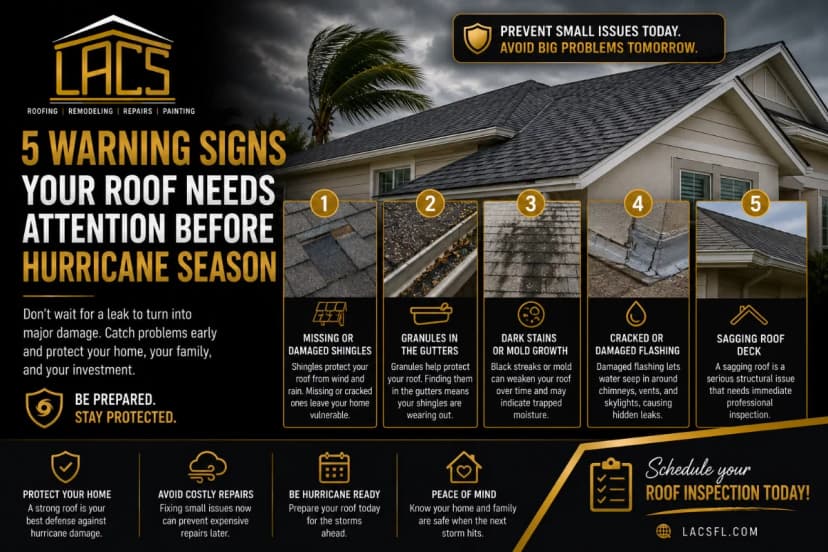
Experienced roofers don’t just “patch the leak”—they identify why water is getting in and whether the problem is flashing, ventilation, underlayment failure, nail placement, or decking damage. That diagnostic skill comes from seeing hundreds of roofs fail in different ways and knowing what patterns to look for before recommending work.
A less experienced contractor often treats symptoms instead of causes. For example: interior staining might look like a pipe boot issue but actually originates from a higher penetration or a valley detail that’s pushing water sideways under wind-driven rain.
Here’s what seasoned roofing contractors typically do before quoting a repair or replacement:
- Inspect penetrations (boots, vents, skylights) and surrounding seals
- Check flashing transitions (walls, chimneys, step flashing)
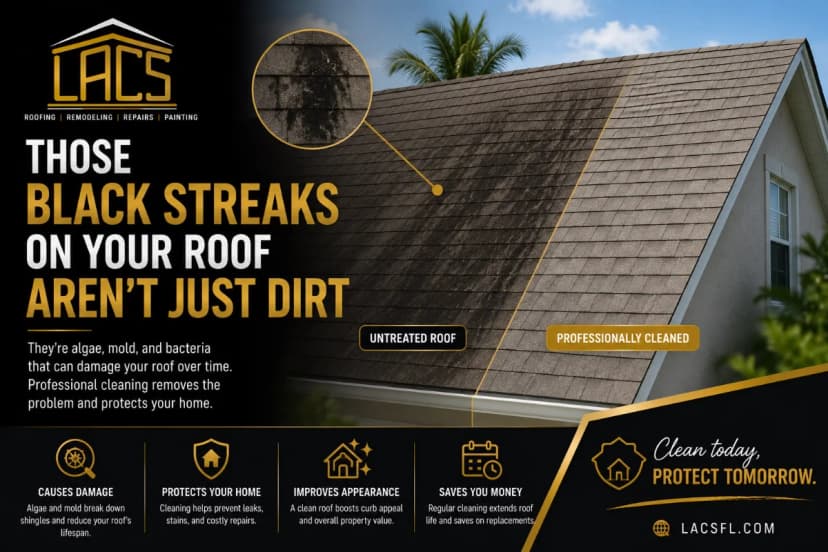
- Evaluate attic conditions (moisture, mold risk, ventilation balance)
- Look for installation errors (exposed nails, improper starter course)
- Confirm whether decking is compromised beneath shingles
To better understand how professional residential roofing inspections uncover hidden issues before they become major damage, see also the article Why Experience Matters When Working on Your Roof.
How to verify a roofer’s experience before you hire them
Experience should be something a contractor can show, not just claim. Before you sign anything, ask for proof that the company has handled projects like yours and has the documentation to support its process.
Check licensing and insurance
At a minimum, you should confirm the contractor’s current business credentials and insurance coverage. Ask for:
- Proof of liability insurance
- Proof of workers’ compensation coverage, if applicable
- The legal business name that will appear on your contract
- Confirmation that the company—not an unknown subcontractor—is responsible for the work
This matters because roofing problems are expensive enough without adding liability confusion if property damage or injuries occur during the job.
Ask for project examples and references
Years in business can be helpful, but they only matter if the contractor has relevant experience with your type of roof and your type of problem. Ask for:
- Photos of recent completed projects
- A portfolio of similar roof types or repair conditions
- References from homeowners with comparable work
- Examples of how the company handled difficult details like flashing, decking replacement, or leak tracing
A contractor who has done many roofs but cannot show work similar to yours may still not be the right fit.
Review local reputation and third-party trust signals
A strong local presence usually means stronger accountability after the job is complete. Look for signs such as:
- Consistent online reviews across major platforms
- Better Business Bureau profile history, if available
- Community reputation and repeat local work
- A real local business presence rather than a temporary storm-response operation
- Clear follow-through on warranty calls and post-project support
The goal is not perfection. The goal is to see whether the company has a track record of staying available when homeowners need help later.
Ask what “years in business” actually means
Longevity matters, but it should be interpreted correctly. A company being around for years can suggest stability, supplier relationships, and repeat customers. But homeowners should still ask:
- How much of your work is repair versus full replacement?
- How often do you work on roofs like mine?
- Who supervises the project?
- How long has the installation crew been doing this kind of work?
A long business history is valuable when it is paired with relevant project experience and consistent workmanship.
Confirm manufacturer familiarity
An experienced roofer should be able to explain how installation requirements affect warranty protection and roof performance. That includes:
- Which materials are being used together
- Whether the system is being installed according to manufacturer requirements
- What details are critical for warranty compliance
- What shortcuts would create future problems
If the answers sound vague, rushed, or overly generic, that’s a warning sign.
Installation technique is where roofs succeed or fail
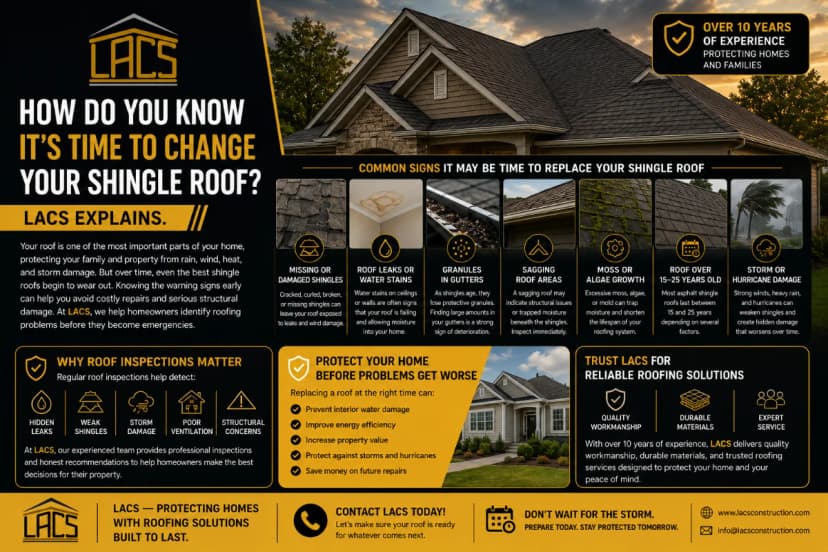
Roofing materials matter—but installation technique is what determines whether those materials perform as designed. Experienced roofers follow manufacturer specifications for nailing patterns, underlayment overlaps, flashing details, ventilation requirements, and edge protection. Those details are exactly where inexperienced crews cut corners without realizing they’re shortening your roof’s life.
Even “small” technique errors can create big issues:
- Overdriven nails can tear shingles and invite blow-offs
- Improper valley installation can channel water under shingles
- Incorrect flashing at walls can cause chronic leaks behind siding
- Poor ridge vent execution can trap heat and moisture in the attic
- Bad drip edge integration can rot fascia and decking over time
An experienced roofing company also sequences the job correctly—tear-off strategy, dry-in timing if weather shifts, cleanup protocols to protect landscaping and prevent nails in tires.
To better understand why workmanship details like flashing and installation methods are not interchangeable between contractors, see also the article What Every Homeowner Should Know Before Hiring a Contractor.
Experienced roofers protect your warranty and insurance outcomes
Warranties and insurance claims often fail for one simple reason: documentation and compliance weren’t handled correctly. Experienced contractors know what manufacturers require for workmanship warranties (and what voids them), and they understand how to support homeowners through insurance processes without creating contradictions that hurt approval.
Roofing experience matters here because it affects:
- Proof of proper installation (photos, material verification, code-aligned methods)
- Clear scope writing that matches adjuster expectations
- Identification of storm-related vs. wear-related damage
- Workmanship warranty strength based on proven processes
- Liability coverage awareness so you’re not exposed during the project
If you’re replacing a roof after wind or hail damage, an inexperienced contractor may miss collateral items (flashing replacements, code upgrades) or fail to document pre-existing conditions—leading to disputes later.
To better understand how licensing, liability insurance, and workmanship warranties should influence who you hire, see also the article Why Hiring a Licensed & Insured Contractor Protects You.
Manufacturer warranty vs. workmanship warranty: what homeowners need to know
Many homeowners hear “warranty” and assume all protection is the same. It isn’t.
A manufacturer warranty generally relates to the roofing materials themselves. A workmanship warranty or labor warranty relates to how the roof was installed. Both matter, but they protect against different problems.
In plain language:
- If a material has a defect, that usually falls under the manufacturer side
- If flashing was installed wrong, nails were placed incorrectly, or details were skipped, that usually falls under workmanship
- If installation does not follow required specifications, warranty protection can become much harder to rely on
That’s why experience matters so much. A roof can use quality materials and still fail early if the installation is poor. Homeowners should ask:
- What warranty applies to the materials?
- What warranty applies to labor or workmanship?
- What installation requirements must be followed to keep coverage valid?
- Who handles documentation if a problem appears later?
An experienced roofer should be able to explain this clearly without hiding behind vague promises.
Permits, inspections, and code compliance matter more than most homeowners realize
Roofing experience is not just about swinging a hammer well. It also includes understanding when permits are required, what local building code expectations apply, and how to prepare work so it passes inspection.
This matters because a roof that looks fine from the street can still have serious compliance problems underneath. Inexperienced contractors may overlook:
- Permit requirements for replacement work
- Inspection scheduling and correction steps
- Code-related upgrades that affect scope
- Documentation needed to show the work was completed properly
For homeowners, permit and inspection issues can create delays, added costs, resale complications, and disputes if problems are discovered later. Experienced roofers usually treat code compliance as part of the job—not as an afterthought once the roof is already installed.
A contractor who is comfortable discussing permits, inspections, and code requirements is usually showing the kind of process discipline that protects homeowners long after the crew leaves.
Safety and site control: experience reduces risk and delays
Roofing is high-risk work—falls, tool hazards, unstable decking, electrical proximity issues near service lines. Experienced roofers don’t treat safety as optional paperwork; they build it into how the job runs. That protects workers, your property, and your timeline.
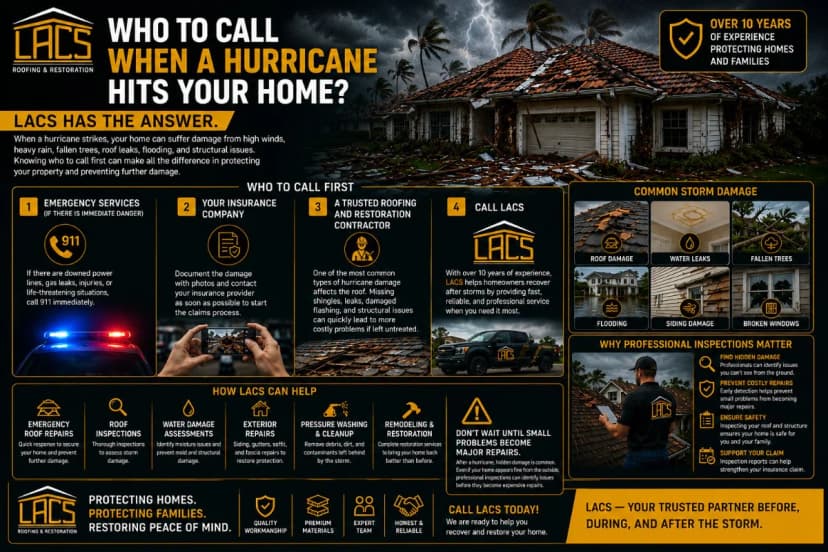
When safety isn’t managed well, homeowners pay for it indirectly through delays, damaged landscaping, broken gutters, cracked tiles from careless foot traffic (especially on delicate systems), or even liability exposure if proper coverage isn’t in place.
What experienced crews typically control better:
- Ladder setup angles and tie-offs
- Harness use on steep slopes
- Weather monitoring (wind gust thresholds matter)
- Debris management (tarps placed intentionally; magnet sweeps)
- Material staging so loads don’t overstress weak decking areas
It’s not only about preventing injuries—it’s about preventing rushed decisions when something goes wrong onsite.
To better understand what professional roofing companies do differently to keep projects controlled from start to finish, see also the article A Decade of Excellence. One Trusted Name: LACS.
Material selection and system compatibility require real expertise
Choosing roofing materials isn’t just picking a color or brand—it’s selecting a system that works with your slope, ventilation design, local climate stressors (heat load, wind uplift), and budget goals. Experienced contractors know which combinations perform well together and which “mix-and-match” choices create premature failure.
For example: certain underlayments pair better with specific shingle types; some ventilation setups can actually worsen moisture problems if intake/exhaust balance is wrong; improper fasteners can corrode depending on environment; and not every roof deck condition supports every installation method.
A practical way experienced roofers guide decisions is by matching materials to outcomes:
- Want longevity? Prioritize correct ventilation + high-quality underlayment + proper flashing details
- Want storm resilience? Focus on wind-rated systems + fastening patterns + edge detailing
- Want fewer future repairs? Choose proven components that are easy to service without disturbing large sections
To better understand how professional contractors evaluate solutions after property damage so repairs don’t create new problems, see also the article Preventive Home Maintenance: Small Repairs That Save Thousands.
What to compare besides price
If you’re reviewing multiple roofing estimates, price alone is one of the weakest ways to judge value. A lower bid may leave out critical scope items that show up later as change orders, failed inspections, or early roof problems.
Use this checklist when comparing contractors:
- Is the scope of work clearly written?
- Are materials specified in enough detail to understand what is actually being installed?
- Does the estimate address flashing, underlayment, ventilation, and decking contingencies?
- Is permit handling included or explained?
- Is cleanup and site protection described?
- Is there a written workmanship or labor warranty?
- Is the contractor insured and willing to provide proof?
- Are project photos, references, reviews, or a portfolio available?
- Is there a plan for hidden damage if discovered during tear-off?
- Does the company explain who will communicate with you if scope or cost changes?
The cheapest number on paper often becomes the most expensive choice once omitted details start turning into problems.
A common homeowner mistake: choosing the lowest bid without comparing scope
One of the most expensive mistakes homeowners make is assuming all roofing estimates cover the same work. They often do not.
A low bid may look attractive because it leaves out items that experienced contractors know are necessary, such as:
- Replacing damaged flashing instead of reusing questionable components
- Addressing ventilation issues that affect roof life
- Planning for decking replacement if soft spots are found
- Including proper dry-in protection if weather changes
- Accounting for permit or inspection requirements
When one estimate is much lower than the rest, the right question is not “How much can I save?” It’s “What is missing?”
What an experienced roofer should provide before work starts
Before a roofing project begins, an experienced contractor should give you more than a price. You should expect clarity.
That usually includes:
- A written scope of work
- Material details and system components
- Basic project timing expectations
- Permit responsibility, if applicable
- Warranty information in plain language
- Proof of insurance when requested
- A process for handling hidden damage or change orders
- A point of contact for communication during the project
This kind of preparation reduces misunderstandings and helps homeowners know what they are approving. It also shows whether the contractor has a real process or is simply trying to get a signature quickly.
When things go wrong, experience is the difference between a fix and a disaster
Every roofing project eventually hits an “unexpected”: soft decking discovered during tear-off, hidden rot around chimneys, improper past repairs layered under new materials expectations, or weather shifting mid-project. Experienced roofers plan for these moments—because they’ve lived them—and they know how to respond without compromising quality.
This is where homeowners get burned by inexperienced contractors. They may:
- Freeze when decking replacement expands scope
- Skip proper dry-in protection when rain threatens
- Install over questionable substrate to avoid hard conversations
- Make unapproved changes that void manufacturer requirements
An experienced company communicates clearly when conditions change: what was found, what it means structurally, what options exist (repair vs. replace sections), how it affects cost/time—and how they’ll ensure water stays out during the transition.
Good communication during change orders is part of experience too. Homeowners should not be left guessing whether added work is necessary, how pricing changed, or what happens next. A seasoned roofer explains the issue, documents it, and gets alignment before moving forward whenever conditions allow.
To better understand why seasoned crews handle complications with less disruption—and why that protects your home long-term, see also the article Why Should I Choose LACS Instead of Another Construction Company?.
Reputation is earned through consistent quality over time
Experience isn’t just years on paper—it’s proof that a contractor has delivered consistent results across many projects: clean installs, durable performance through storms, responsive warranty handling, and honest guidance when homeowners face tough decisions.
A strong reputation usually signals:
- Stable business operations (not popping up after storms then disappearing)
- Repeat customers and referrals
- A portfolio of comparable roofing work (similar slopes/materials/problems)
- Established supplier relationships for reliable materials availability
- Clear processes for warranty calls and post-project support
When you hire based only on price without weighing reputation tied to experience, you often end up paying twice: once for the cheap job—and again for corrections after leaks or blow-offs appear.
To better understand how professional residential roofing support reduces long-term costs through better planning and execution, see also the article How Home Improvements Elevate Comfort, Safety, and Emotional Well-Being.
Is paying more for an experienced roofer actually worth it?
Yes—because roofing mistakes are rarely cheap “oops” moments; they become water intrusion events that damage insulation, drywall, framing lumber, electrical areas near ceilings, and sometimes HVAC ductwork in attics. An experienced contractor reduces risk at every stage: diagnosis before work starts, correct installation techniques during the project, safer jobsite management while your home is exposed, permit and inspection readiness, and stronger documentation for warranty or insurance needs later. The value isn’t just fewer leaks—it’s fewer delays from rework orders, fewer surprise change orders caused by missed inspection steps, better material compatibility decisions that extend service life, and clearer accountability if anything does fail. In most homes, your roof protects everything else you own; paying for experience is paying for predictable performance.
With Experience or Without Experience: What’s the Difference?
| What you’re comparing | With an experienced roofing contractor | Without an experienced roofing contractor |
|---|---|---|
| Diagnosis | Problems are identified at the source | Symptoms are guessed at and patched |
| Installation | Work follows manufacturer specs and proven methods | Details like flashing, nailing, and ventilation are improvised or rushed |
| Warranties | Material and workmanship requirements are more likely to stay intact | Warranty protection becomes unclear when installation errors appear |
| Permits and inspections | Code requirements are anticipated and handled more smoothly | Missed permit or inspection issues create delays and corrections |
| Communication | Hidden damage and change orders are explained clearly | Homeowners get surprises after the roof is already open |
| Jobsite control | Safety, weather response, and dry-in are treated as part of craftsmanship | Projects are more vulnerable to delays, exposure, and avoidable mistakes |
| Long-term cost | Fewer repeat repairs and less uncertainty | Cheap work often becomes expensive rework |
The practical takeaway: experience doesn’t just improve quality—it reduces uncertainty when your home is most vulnerable.
📌 Decision If you’re letting someone work on your roof without verified experience doing your exact type of project—repair or full installation—you’re accepting preventable risk that shows up as leaks, rot discovery too late, failed inspections, or warranty disputes. Every month you delay hiring proven professionals is another month weather can turn minor issues into structural damage that costs far more than doing it right now.
Conclusion
Roofing experience matters because roofs fail at details: diagnosis accuracy before work begins; installation technique during the project; ventilation/flashing integration; safety controls; permit and inspection readiness; documentation that protects warranties and insurance outcomes; and calm problem-solving when hidden damage appears mid-job.
If you want predictable results instead of repeated repairs—and you want your home protected during every phase of work—hire experienced roofers who can prove their process. Ask for scope clarity, insurance verification, warranty explanations, references, project examples, and a clear plan for communication before work starts. To better understand what separates professional residential roofing support from risky low-bid work, see also the article Why Experience Matters When Working on Your Roof.
You’re dealing with missing shingles, active leaks, stains spreading across ceilings—or a roof that simply looks “tired” before its time. If you wait, each storm cycle increases damage inside decking and insulation while repair options shrink. Talk to LACS now and get expert eyes on your roof so the work is done safely, correctly, and warranty-compliant.