Why Pressure Washing Is More Than Just Curb Appeal
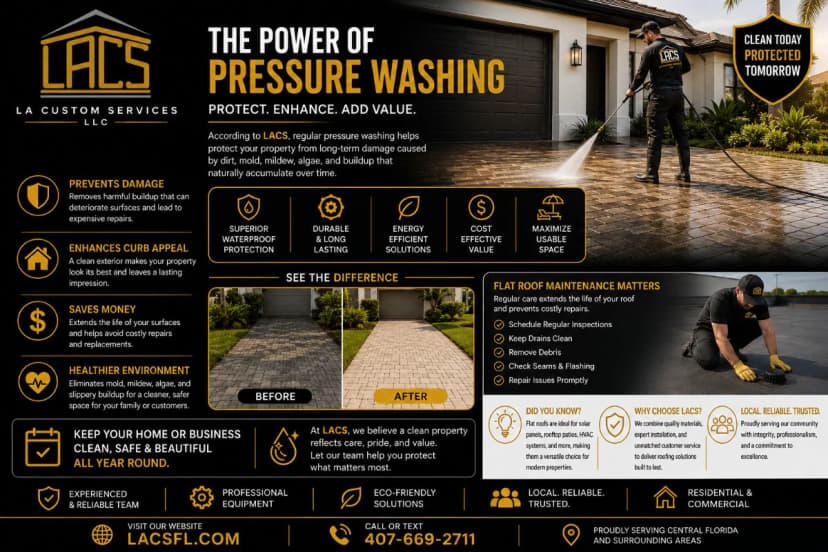
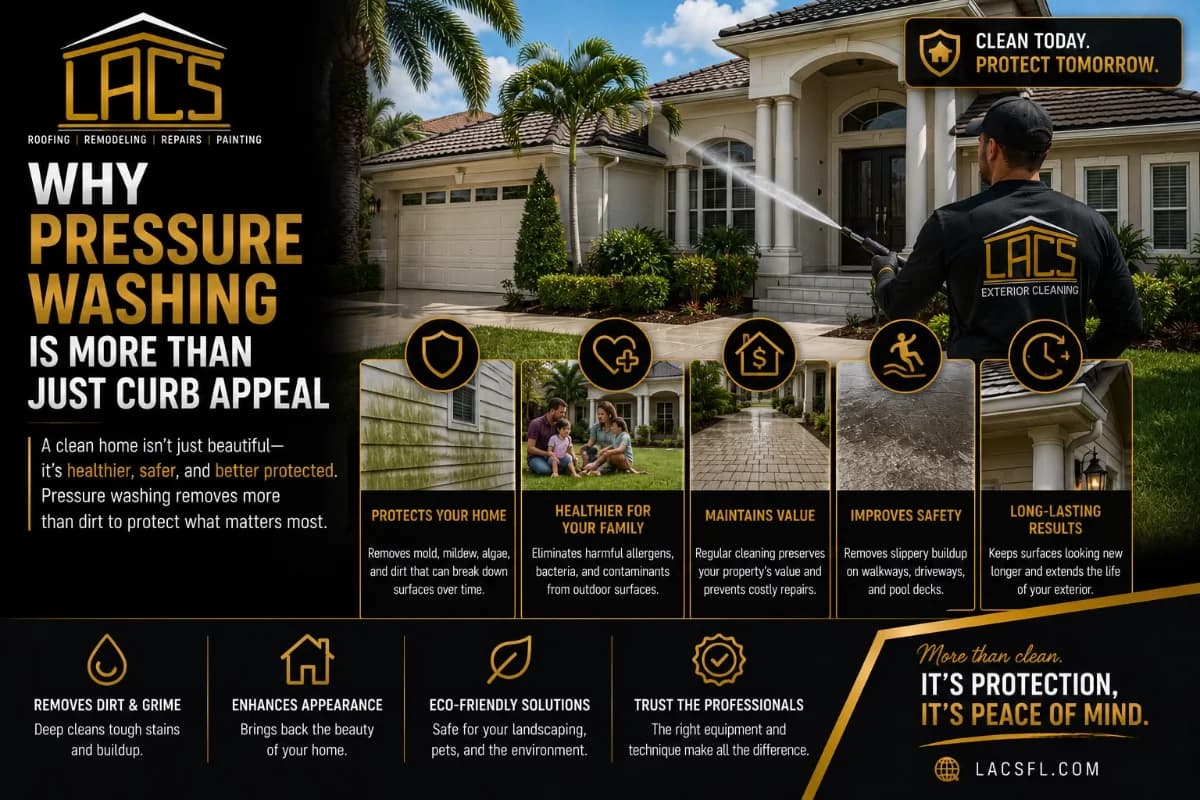
Pressure washing protects siding, concrete, roofs, and decks by removing moisture-holding grime, algae, and mildew—supporting safer, longer-lasting exteriors.
Why is pressure washing more than just curb appeal?
Pressure washing is more than a cosmetic upgrade because it removes moisture-holding grime, algae, mildew, and stains that can shorten the life of siding, concrete, roofing materials, and outdoor wood. Done correctly, it supports property maintenance, helps prevent exterior damage, improves safety, and protects home value over time.
To understand more about choosing the right contractor for exterior upgrades, repairs, and long-term property care, also see the Why Choose LACS for Your Roofing or Remodeling Project? article.
A clean home exterior usually signals something bigger than appearance alone: consistent upkeep. Pressure washing services help remove buildup that traps water against surfaces, feeds organic growth, and makes small defects harder to spot. That matters in Florida, where heat, rain, and humidity can turn minor neglect into staining, slippery walkways, or premature wear.
It removes contaminants that quietly damage exterior surfaces
Most homeowners notice dirt first, but the bigger issue is what sits underneath it. Algae, mildew, mold, pollen residue, road film, and airborne pollutants can cling to siding, concrete, roof surfaces, and decks. Once those contaminants stay wet for long periods, they create conditions that speed up deterioration. What looks like a harmless discoloration may actually be a layer of organic growth holding moisture against paint, sealants, or porous materials.
That is why exterior cleaning should be viewed as part of routine exterior maintenance, not just a visual touch-up. A proper wash can reveal cracks, failing caulk, surface wear, and drainage patterns that would otherwise stay hidden under grime. On many homes, especially in humid climates, regular home exterior cleaning helps reduce the long-term impact of biological growth before it turns into a repair problem.
It helps prevent costly repairs to siding, concrete, roofs, and decks
Different materials fail in different ways, but buildup makes almost all of them age faster. Siding can stain and hold moisture around seams. Concrete can become slick and discolored while embedded grime deepens into the surface. Roof areas may develop dark streaks or algae colonies. Deck boards can stay damp longer than they should, which increases wear and raises slip risk.
In practical terms, pressure washing benefits include extending the useful life of finishes and helping owners catch trouble earlier. For broader guidance on avoiding expensive deterioration through routine upkeep, also see the Preventive Home Maintenance: Small Repairs That Save Thousands article.
It supports long-term home maintenance, not just short-term appearance
The best reason to schedule residential pressure washing is not that the house will look brighter by evening, though it usually will. The real value is that clean surfaces are easier to inspect, easier to maintain, and less likely to suffer hidden damage from trapped moisture or organic buildup. That makes washing part of a larger maintenance strategy rather than an isolated cleanup task.
Florida homeowners often benefit from pairing cleaning with seasonal inspections of roofing, drainage paths, paint condition, and hardscape surfaces. If you are thinking about how upgrades and maintenance work together to protect comfort and safety at home, also see the How Home Improvements Elevate Comfort, Safety, and Emotional Well-Being article.
If you are seeing algae streaks, slippery concrete, dingy siding, or recurring stains that keep coming back after basic rinsing, it may be time for a professional evaluation. A trained crew can choose the right method for each surface and clean more safely than trial-and-error DIY work.
👉 Protect your home before small problems become expensive repairs. Contact LACS today and schedule your professional pressure washing assessment.

Table of Contents
- How does exterior cleaning help protect a home over time
- Pressure washing vs soft washing: what is the difference
- When does pressure washing make the biggest maintenance impact
- What should homeowners expect from professional pressure washing services
- What mistakes can turn pressure washing into surface damage
- Conclusion
- Frequently Asked Questions
How does exterior cleaning help protect a home over time?
Regular exterior surface cleaning protects a home by removing organic growth and residue before they break down finishes or keep materials wet for too long. Over time, that reduces avoidable wear on painted siding, concrete areas, wood structures, and other exposed surfaces.
Organic growth traps moisture and speeds up exterior wear
Mold, algae, and mildew are not just ugly stains. They tend to grow where moisture lingers and airflow is limited. Once established on siding, trim, roofing edges, fences, or patios, they can hold dampness against the material longer than normal weather exposure would. That repeated wetting cycle contributes to fading, breakdown of coatings, and gradual surface decline.
This is especially relevant in Florida conditions. Shade, humidity, irrigation overspray, and frequent rain create ideal conditions for algae removal, mildew removal, and mold removal to become recurring needs rather than one-time jobs.
Dirt, salt, and grime can shorten the life of paint, sealants, and finishes
Not all contamination is biological. Dust films, traffic residue, salt exposure near coastal areas, fertilizer splashback, rust marks from fixtures, and general airborne grime can all build up on exterior materials. These layers may seem minor at first but can interfere with how surfaces dry out and how well coatings perform.
For homeowners planning broader Florida upkeep around weather exposure and protective systems before storm season arrives, also see the Hurricane Season Starts with Protection You Can Trust- LACS Has You Covered article.
Regular home exterior cleaning can reduce repair frequency and preserve home value
A cleaner property is easier to maintain because problems become visible sooner. Once stains are removed from walkways or siding is cleared of buildup, owners can better identify cracked caulk joints, chipped paint areas, loose trim pieces, settlement lines in concrete, or drainage trouble near foundations. That supports smarter scheduling for repairs instead of waiting until deterioration becomes obvious.
There is also a resale advantage. Buyers often read cleanliness as evidence of overall care. For a deeper look at how washing supports perceived condition and marketability before listing a property, also see the How Pressure Washing Increases Property Value Before Selling article.
Pressure washing vs soft washing: what is the difference?
The difference comes down to force and surface suitability. Pressure washing uses higher water pressure for durable materials like concrete. Soft washing relies on lower pressure plus cleaning solutions for delicate areas such as roofs or painted siding. Choosing correctly matters as much as cleaning thoroughly.
When pressure washing is right for concrete, driveways, and other durable surfaces
High-pressure cleaning works best on hard surfaces that can tolerate force without fraying, cracking from impact at close range, or losing protective coatings. That includes many forms of driveway cleaning, sidewalks, pavers in stable condition, some masonry surfaces, garage floors, pool decks designed for wash-downs, and certain commercial-grade exterior slabs.
On these surfaces, driveway pressure washing or concrete cleaning can remove embedded dirt, tire marks, algae film, food spills near outdoor living spaces, and general weather staining more effectively than a garden hose or household scrub brush.
When soft washing is safer for roof cleaning, house washing, and delicate materials
Lower-pressure methods are usually better for asphalt shingles, tile roofs with vulnerable edges or aged underlayment concerns, painted stucco finishes depending on condition, vinyl siding seams, screened enclosures near trim details, fences with aging coatings, and many forms of house washing. The goal is to kill organic growth and lift stains without forcing water behind materials or stripping away finish layers.
If your concern involves roof condition as well as appearance—especially when dark streaks overlap with age-related wear—also see the How Do You Know It’s Time to Replace Your Shingle Roof? — LACS Explains article.
Why using the wrong method can cause etching water intrusion or premature aging
The biggest mistake in power washing is assuming more pressure means better results. Excess force can etch concrete lines into view permanently; scar wood fibers during deck cleaning; strip paint; loosen mortar joints; bend aluminum details; or drive water behind siding panels and trim assemblies. On roofs it can dislodge granules or disturb vulnerable areas around flashing.
A good technician matches nozzle type, distance from surface level condition detergent selection dwell time rinse pattern runoff control surrounding landscaping protection drying conditions access safety needs local climate concerns preparation requirements expected results follow-up inspection steps documentation communication scheduling equipment calibration experience level training standards surface porosity coating age stain type biological load slip hazard severity drainage behavior nearby electrical fixtures window seals caulk integrity seam exposure traffic patterns homeowner goals budget limits maintenance history sun exposure shade patterns prior repairs material compatibility manufacturer guidance post-cleaning care recommendations.
👉 Don't wait for stains, algae, and moisture to damage your property. Get a customized pressure washing solution from the LACS team today.
Comparison block: pressure washing power washing and soft washing by surface type risk level and cleaning goal
| Method | Best for | Risk level if misused | Main goal |
|---|---|---|---|
| Pressure washing | Concrete cleaning, driveway cleaning, durable walkways | Moderate to high | Remove heavy grime and restore traction |
| Power washing | Similar hard surfaces where heated water may help cut grease or stubborn residue | Moderate to high | Deep-clean tough buildup |
| Soft washing | Roof cleaning, siding cleaning, house washing | Low to moderate when done correctly | Treat organic growth with less surface stress |
When does pressure washing make the biggest maintenance impact?
Pressure washing has its biggest payoff when timed around maintenance decisions: before painting or sealing surfaces; during humid seasons when algae spreads quickly; and on high-use areas where dirt buildup becomes both a wear issue and a safety issue.
Before painting or sealing surface cleaning improves adhesion and finish life
One of the most practical uses of pressure washing before painting is preparation. Paint does not bond well to chalky residue dust mildew film peeling fragments or greasy contamination. Sealers behave the same way on many hardscape materials. Cleaning first gives coatings a more stable base so they adhere better and last longer.
That does not mean every painted area should be blasted with high pressure. Surface prep should match substrate condition. For related planning around larger Florida projects involving sequencing scope timing permits trades budgets and finish coordination also see the The Complete Guide to Construction Projects in Florida by LACSFL article.
Seasonal cleaning helps manage Florida humidity algae and mildew buildup
In Florida climates especially humid ones exterior buildup tends to return faster than homeowners expect. North-facing walls shaded fences lanais roof lines driveway edges under trees and pool deck zones often show green film black streaking or mildew spotting first. Seasonal service helps interrupt that cycle before stains deepen or walking areas become slick.
For scheduling guidance based on local weather patterns material type exposure levels roofs patios fences driveways pool decks and siding also see the How Often Should You Pressure Wash Your Home in Florida? article.
High-traffic areas like driveways walkways and patios benefit from routine cleaning
Some parts of a property simply collect more abuse than others. Tire traffic grinds dirt into driveways; foot traffic darkens entry walks; food spills stain patio slabs; planters leave runoff marks; irrigation overspray feeds algae along edges; shaded corners stay damp longer than open sunlit sections. These zones benefit from routine attention because they affect both usability and first impressions every day.
In many cases the immediate improvement in traction matters as much as appearance. Removing slime film from concrete steps ramps pool surrounds or front paths can lower slip risk while restoring a cleaner look that supports overall curb appeal.
What should homeowners expect from professional pressure washing services?
Homeowners should expect more than someone showing up with a machine. Professional service starts with evaluating each material correctly; choosing safe detergents and pressure levels; protecting nearby finishes; managing runoff; and explaining what results are realistic for stains versus permanent damage.
A professional assessment should match cleaning method to surface condition
Experienced crews do not treat every area alike. They look at substrate type coating age oxidation level existing cracks biological growth severity drainage direction nearby electrical components landscaping sensitivity window seals accessibility ladder needs fall risks water supply limitations stain source previous repairs manufacturer cautions local climate effects homeowner priorities scheduling constraints drying time expectations post-cleaning recommendations warranty considerations photo documentation communication quality crew training equipment setup nozzle selection detergent compatibility rinse strategy overspray control edge detailing spot treatment needs repeat-service intervals contamination history sun exposure mold recurrence patterns slip hazards visible defects hidden vulnerabilities adjoining materials transition points caulk condition gutter discharge effects foundation splash zones patio furniture protection vehicle shielding pet safety child access noise timing neighborhood restrictions disposal practices service scope clarity pricing transparency arrival reliability cleanup standards final walkthrough completeness.
Service quality depends on equipment detergents runoff control and technician experience
Good results come from process control rather than raw force alone. Commercial equipment allows steadier output; proper detergents improve stain removal; pre-treatment helps with embedded biological growth; runoff management protects surrounding areas; trained technicians know when repeated passes will help versus when discoloration has become permanent damage rather than removable grime.
If you want to see how broad service quality connects with long-term trust across roofing painting remodeling pavers granite care and exterior work also see the A Decade of Excellence. One Trusted Name: LACS article.
Florida pressure washing needs local awareness of heat rain algae and exterior materials
Florida pressure washing is not identical to service in drier climates. Heat accelerates drying in some conditions but shaded humidity-heavy areas stay wet enough for rapid regrowth. Rainfall changes scheduling windows. Coastal exposure affects residue patterns. Stucco tile asphalt shingles painted masonry screen enclosures pavers sealed concrete composite decking natural stone wood fencing vinyl panels metal details solar fixtures gutters soffits fascia boards lanais pool cages dock-adjacent structures all respond differently.
A local provider should understand these variables well enough to recommend practical service intervals instead of one-size-fits-all packages.
What mistakes can turn pressure washing into surface damage?
Pressure washing becomes risky when people use too much force choose the wrong method skip pre-treatment or ignore access hazards. Most damage happens not because cleaning is inherently unsafe but because technique does not match material condition or site complexity.
Too much pressure can damage siding wood fibers mortar joints and painted surfaces
This is the most common error in DIY work. Holding a wand too close can gouge wood raise grain strip paint scar soft masonry blast out mortar weaken old caulk force water behind trim dent lightweight metals shred screens mark composite boards or leave visible lap lines on siding panels. Even concrete can be etched if cleaned aggressively with poor technique.
Surface age matters too. Older paint systems weathered sealants brittle trim pieces oxidized vinyl weakened grout deteriorated flashing aged shingles sun-baked plastics loose pavers decayed deck boards cracked stucco hairline joints softened fiber cement edges chalked coatings patched areas previous leak points all need more caution than newer durable construction.
Skipping pre-treatment can leave behind mold mildew and embedded stains
Another mistake is trying to rinse away biological growth without treating it first. The surface may look cleaner for a short time while spores remain active below the visible layer. That leads to faster regrowth especially in shaded humid spots where moisture returns quickly after rainfall or irrigation cycles.
Proper pre-treatment improves mildew removal, supports deeper mold removal, helps loosen stubborn staining around organic colonies ,and reduces the temptation to compensate with damaging pressure alone.
DIY cleaning often misses safety issues around ladders roofs and electrical fixtures
Homeowners sometimes underestimate how fast routine rinsing becomes hazardous once height electricity slippery runoff uneven ground extension cords roof edges second-story reaches glass panels light fixtures overhead lines steep drives chemical handling pets children parked vehicles landscaping drains neighboring overspray wind shifts sun glare fatigue hose drag trip points wet shoes unstable ladders fragile gutters hidden wasp nests loose handrails narrow side yards confined passages detached nozzles recoil force blind corners low branches attic vents soffit openings satellite mounts cameras doorbell wiring pool equipment generators AC disconnects solar hardware skylights chimney caps ridge vents valleys dormers flashing seams intersecting roof planes enter the equation.
📌 Decision: Choose DIY only for low-risk ground-level concrete cleaning in open areas with good drainage and no delicate adjacent materials. Choose professional pressure washing for roofs, painted siding, decks, elevated work zones, large-scale exterior surface cleaning, recurring algae problems ,or any project where using the wrong method could cause costly damage.
When you notice algae streaks on roofing low-slope transitions slippery driveway sections dingy house walls recurring patio stains or dark buildup around entries it makes sense to get an expert opinion before trying stronger settings on your own equipment.
👉 Keep your home's exterior cleaner, safer, and protected year-round. Talk to LACS and discover the right cleaning method for every surface.
Conclusion
Pressure washing matters because it protects more than appearance alone. The real benefit is removing contaminants that hold moisture degrade finishes reduce traction hide defects and accelerate wear across siding roofs decks patios driveways walkways fences trim details and other exposed materials throughout a property.
Used correctly whether through standard high-pressure methods on durable slabs or soft washing on delicate surfaces it becomes part of smart property protection rather than occasional cosmetic cleanup. That means fewer preventable repairs better visibility into developing problems improved safety underfoot stronger prep before painting or sealing cleaner presentation better support for resale perception more consistent upkeep through Florida weather cycles reduced stress about recurring stains longer service life from exterior materials clearer maintenance planning improved performance from protective coatings earlier detection of trouble spots more confidence in overall home care decisions.
The best next step is simple: match the method to the material match the schedule to your climate exposure ,and bring in experienced help when stakes are higher than basic ground-level rinsing.